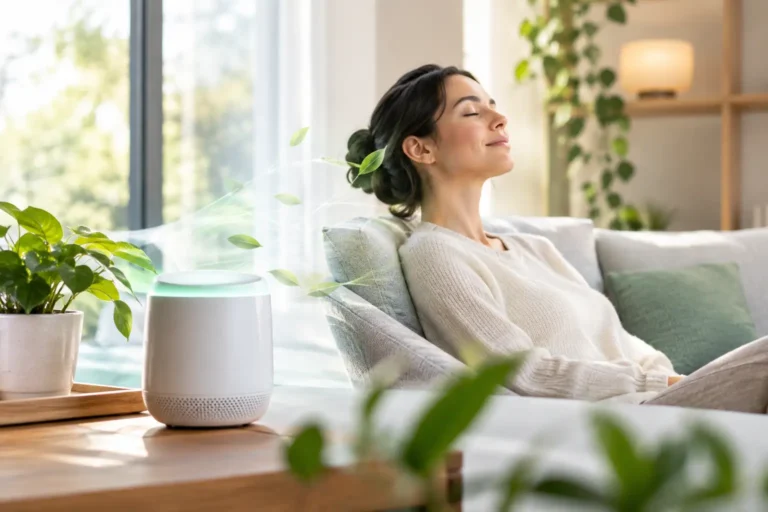

A hotel room, recovery suite, or home office can feel noticeably different when its atmosphere supports calm rather than adding to sensory overload. But are phytoncides safe indoors? For most people, thoughtfully controlled exposure to nature-derived aromatic compounds can be a comfortable part of an indoor wellness setting. The key is not simply bringing a forest-like experience inside. It is managing concentration, individual sensitivity, ventilation, and product quality with the same care expected of any premium wellness technology.
Phytoncides are volatile organic compounds released by trees and plants, especially conifers such as pine, fir, cedar, and cypress. In forests, they are part of a plant’s natural defense system. People commonly associate them with the fresh, resinous character of woodland air and with the restorative feeling of time spent among trees.
Indoors, the conversation becomes more precise. A forest is vast, open, and constantly refreshed by moving air. An interior is enclosed, climate-controlled, and used by people with different health histories. Safety therefore depends on how a phytoncide-based experience is created and maintained, not on the word “natural” alone.
Are Phytoncides Safe Indoors at Everyday Levels?
For healthy adults, low and well-managed levels of nature-inspired aromatic compounds are generally considered appropriate in a well-ventilated space. The experience should be subtle: clean, fresh, and comfortable rather than intensely scented. If a guest notices burning eyes, throat irritation, headache, nausea, dizziness, or a feeling that the fragrance is overpowering, the setting is not well calibrated for that person.
This distinction matters because phytoncides are still volatile compounds. Natural origin does not guarantee universal tolerance. The same is true of many familiar materials and aromas, from flowers and wood to cooking ingredients. In an enclosed room, excessive concentration can create discomfort even when the underlying source is botanical.
A responsible indoor system should prioritize measured, consistent operation rather than a dramatic sensory effect. The aim is to support a sense of freshness and restoration without turning a room into a strongly fragranced environment.
What the research can and cannot say
Interest in forest bathing and forest environments has grown because time in nature is associated with lower perceived stress, improved mood, and restorative attention. Some research has explored how forest-derived compounds may contribute to these effects, alongside visual greenery, movement, quiet, daylight, and distance from daily demands.
Yet it would be inaccurate to suggest that indoor phytoncides recreate every physiological aspect of a forest or that they treat disease. A carefully designed indoor wellness environment can support relaxation, breathing comfort, focus, and recovery rituals. It should not be presented as a replacement for medical evaluation, prescribed treatment, or a healthy lifestyle.
For wellness professionals and hospitality operators, this is a strength rather than a limitation. Clear claims build trust. Guests deserve an experience that is refined, evidence-aware, and transparent about what it is designed to support.
The Factors That Determine Indoor Safety
There is no single safe setting that applies to every person and every room. The right approach depends on the concentration of airborne compounds, the size and use of the room, the duration of exposure, and the people who will occupy it.
Room volume is especially relevant. A subtle level in a large spa lounge may become too noticeable in a compact treatment room or hotel bedroom. Occupancy also changes the equation. A private user can adjust the experience according to personal preference, while a business serving many guests should choose conservative settings and provide simple options for those who prefer a neutral environment.
Ventilation is equally important. Fresh-air exchange helps maintain a balanced indoor atmosphere and prevents aromatic compounds from accumulating over time. A wellness room should feel refreshed, not sealed off. Regular maintenance, clean surfaces, and adherence to the manufacturer’s operating guidance are part of safety, not merely technical housekeeping.
Finally, quality matters. Products intended for indoor use should be designed for controlled application, with transparent information about ingredients, emissions, operating limits, and maintenance. Avoid improvised methods that use concentrated oils, unverified blends, or excessive fragrance in confined spaces. More is not better.
Who Should Take Extra Care?
People respond differently to aromatic environments. A cautious, individualized approach is appropriate for anyone with asthma, chronic respiratory disease, fragrance sensitivity, migraines, chemical sensitivities, or known allergies to plant-derived ingredients. People recovering from an acute respiratory illness may also prefer a neutral environment until they feel well.
Children, older adults, pregnant individuals, and people with complex medical conditions may have different tolerances. This does not automatically mean that a phytoncide-inspired setting is unsuitable. It means exposure should be conservative, optional, and stopped if it causes discomfort. When there is uncertainty, a clinician familiar with the person’s health needs can offer appropriate guidance.
For hotels, clinics, spas, and offices, choice is a mark of quality. Clearly communicate that the space uses a nature-inspired air experience, offer a fragrance-neutral alternative where practical, and make it easy for a guest or employee to leave the area without explanation. Premium wellness should feel welcoming, never obligatory.
How to Create a Comfortable Indoor Experience
The most successful nature-inspired spaces are restrained. They combine clean design, low-intensity sensory cues, good lighting, quiet, and a routine that gives people permission to pause. Phytoncides, when used, work best as one considered element within that environment.
Start with a low setting and allow occupants time to assess comfort. A fragrance should not be the first thing someone notices upon entering the room. Instead, the room should feel composed: easier to settle into, pleasant to breathe in, and free from the stale character that often accompanies long hours indoors.
Use predictable operating times. In a guest room, a short pre-arrival cycle may be more appropriate than continuous operation throughout the stay. In a treatment setting, the system can be adjusted between clients and reviewed as part of the room-preparation protocol. In an office, a lighter daytime approach may suit concentration, while quieter recovery areas may call for even lower exposure.
Staff education is essential in professional settings. Teams should know how the technology works, what questions to ask when someone reports sensitivity, and when to reduce or stop operation. They should never dismiss symptoms as imagined or assume that a natural aroma is harmless to every individual.
Design for the whole environment, not one sensation
A well-being space is more than an airborne experience. Natural materials, comfortable humidity, thoughtful temperature control, restorative lighting, and quiet all influence how a room feels. This integrated perspective is central to premium wellness design.
HealthWise approaches this principle by pairing Forest Air’s nature-inspired, light-activated air revitalization with red and near-infrared photobiomodulation technologies from Nircura. The purpose is not to overwhelm the senses with a single intervention. It is to create a coherent environment that supports moments of calm, recovery, and everyday vitality through non-invasive tools.
That combination also helps keep expectations realistic. Someone may value a forest-inspired atmosphere before rest, after travel, or during a recovery ritual, while red and near-infrared light may fit a separate regeneration routine. Each element has its own use, operating considerations, and suitability for the individual.
Questions to Ask Before Choosing a System
Before installing any phytoncide-based indoor technology, ask for clear answers. What compounds are used or generated? How is output controlled? What room size is recommended? What maintenance is required? Is there guidance for sensitive users? Can the system be reduced, paused, or scheduled easily?
These questions are valuable for private buyers and essential for commercial operators. A wellness investment should support operational confidence as well as guest comfort. The right partner will explain the technology in plain language, avoid exaggerated health promises, and help tailor the experience to the room’s purpose.
It is also wise to evaluate the space after installation. Invite feedback from users, check whether the room ever feels overly scented, and adjust settings according to season, occupancy, and ventilation patterns. Wellness design improves when it responds to real people rather than staying fixed on a showroom setting.
A carefully moderated phytoncide experience can bring a welcome trace of nature into rooms where people sleep, work, recover, and pause. The most reassuring sign of a well-designed system is simple: people feel better in the space, yet the technology never asks them to tolerate discomfort to get there.