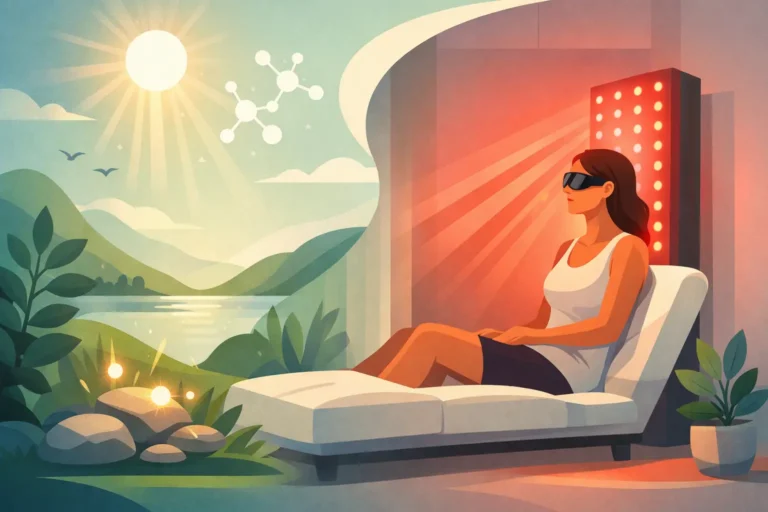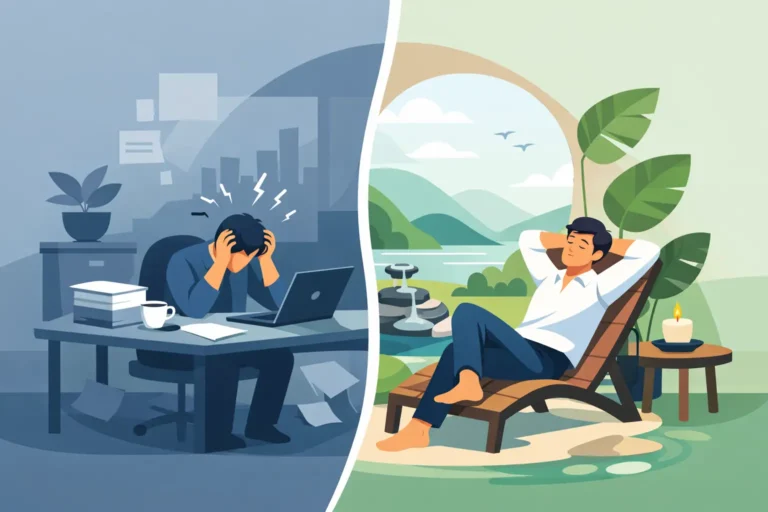

A demanding day leaves a recognizable signature: heavy legs after travel, a mind that will not settle after meetings, muscles that remain tight long after training ends. Understanding how near infrared aids regeneration offers a more considered response than simply pushing through fatigue. Near-infrared photobiomodulation uses specific wavelengths of light to support the biological processes involved in recovery, without heat-based strain, needles, or downtime.
For people building healthier homes, hospitality spaces, recovery centers, and high-performing workplaces, its appeal is practical. A well-designed near-infrared session can become a quiet, repeatable recovery ritual – one that fits before work, after exercise, or at the end of a long day.
How Near Infrared Aids Regeneration at the Cellular Level
Near-infrared light sits just beyond the visible red spectrum. Although the eye cannot see it, these wavelengths can reach deeper into tissue than visible red light. That distinction matters when the goal is to support muscles, joints, and other deeper structures involved in physical recovery.
Photobiomodulation is the scientific term for the interaction between targeted light and cells. In simple terms, cells absorb light energy through photoacceptors, particularly within mitochondria. Mitochondria are often described as the cell’s energy centers because they produce adenosine triphosphate, or ATP, the molecule cells use to perform work.
When the body is under physical or mental load, efficient cellular energy production matters. Near-infrared light may support mitochondrial function and cellular signaling, helping create conditions favorable to repair, adaptation, and recovery. It is not a shortcut around sleep, nutrition, movement, or medical care. It is a non-invasive tool that can complement those foundations.
Research into photobiomodulation also examines its influence on nitric oxide signaling and microcirculation. Healthy circulation helps deliver oxygen and nutrients while supporting the removal of metabolic byproducts. This is one reason near infrared is frequently used in recovery-focused wellness settings, especially after exercise, prolonged sitting, travel, or demanding work schedules.
The response is biological, not cosmetic. The goal is not to force the body into recovery, but to provide a precise form of light that supports the body’s own regenerative capacity.
Why Regeneration Is More Than Muscle Recovery
Regeneration is often reduced to sports performance. In reality, recovery is a whole-system need. A hotel guest arriving after a transatlantic flight, an executive coming off a high-pressure presentation, and a parent trying to restore a calmer evening routine may all benefit from the same basic principle: the body recovers better when it receives consistent signals of safety, rest, and support.
Near-infrared sessions are especially relevant when recovery demands accumulate. This may include muscle soreness after training, stiffness from desk work, physical fatigue from travel, or the general feeling of depleted energy that can accompany a fast-paced routine. Because photobiomodulation is non-invasive, it can be integrated without interrupting the day.
There is also a meaningful connection between physical comfort and mental restoration. When muscle tension eases and a person creates time to pause, it can become easier to transition out of a high-alert state. Near infrared should not be presented as a treatment for stress-related conditions, but it can be part of a broader wellness routine designed around calm, sleep quality, and recovery.
For premium wellness environments, this broader view is essential. A regenerative experience is shaped not only by a device, but also by the atmosphere surrounding the session: a quiet room, appropriate timing, comfortable positioning, and an environment that encourages slower breathing and genuine decompression.
Red Light and Near Infrared: A Complementary Pair
Red light and near-infrared light are often used together, yet they are not identical. Red light is visible and is generally associated with more superficial tissue. Near infrared is invisible and typically reaches deeper. A quality photobiomodulation system can combine both ranges to create a more complete approach to everyday skin, tissue, and recovery support.
This does not mean that more wavelengths or more power automatically produce better results. Photobiomodulation follows a dose-response relationship. Too little exposure may not create a meaningful effect, while too much exposure may be less helpful than a measured protocol. Device quality, wavelength selection, irradiance, treatment distance, and session duration all shape the experience.
That is why professional guidance matters, particularly for spas, rehabilitation centers, and hospitality operators. A premium recovery offering should be based on clear usage protocols rather than vague promises. Users need to know where to position themselves, how long to use the system, how frequently to repeat sessions, and when to seek medical advice instead.
Consistency Has More Value Than Intensity
A sensible near-infrared routine is usually built over time. Some people notice a sense of warmth, relaxation, or improved comfort soon after a session. Other benefits may be more gradual and depend on the person’s baseline health, training load, sleep, and consistency of use.
For everyday recovery, shorter regular sessions are often easier to maintain than occasional, overly long sessions. The right approach depends on the device and the intended goal. Follow the manufacturer’s protocol rather than copying generic advice from social media.
Practical Uses in Modern Wellness Spaces
Near-infrared photobiomodulation is particularly valuable because it adapts to different environments without asking people to add another complicated task to their schedule.
In a hotel room or private residence, it can support a pre-sleep wind-down ritual after travel or a busy day. In an office wellness area, a brief session can provide a restorative pause between intense blocks of work. In a spa or rehabilitation setting, it can complement recovery-focused services where the aim is to help guests feel cared for, comfortable, and ready to return to daily life.
Athletes and active adults may choose near infrared after training as part of a balanced recovery plan that also includes hydration, protein intake, mobility work, and adequate sleep. For people with sedentary routines, the same technology may feel most relevant after long hours of sitting, when stiffness and reduced movement have become a daily pattern.
The setting affects adherence. If a wellness tool is difficult to access, requires extensive preparation, or feels clinical and impersonal, it is less likely to become a habit. Integrated environments designed with thoughtful lighting, restorative comfort, and easy-use photobiomodulation make recovery feel natural rather than aspirational.
HealthWise approaches this principle by bringing advanced red and near-infrared photobiomodulation into a wider wellness experience designed for modern spaces. The strongest results come from a coherent environment that supports both restoration and everyday usability.
What Near Infrared Can and Cannot Do
Near infrared is best understood as supportive wellness technology. It may help promote conditions associated with recovery, including cellular energy metabolism, circulation, and post-exertion comfort. Yet it does not replace diagnosis, physical therapy, prescribed treatment, or the basics of a healthy lifestyle.
People with a medical condition, active injury, photosensitivity, or concerns about medication interactions should speak with a qualified healthcare professional before beginning a new light-based regimen. Those who are pregnant, managing cancer, or receiving treatment for a serious condition should seek individualized clinical guidance. Eye protection and device-specific safety instructions should always be followed.
Expectations also deserve discipline. No device can compensate for chronically insufficient sleep, a highly inflammatory lifestyle, or an unsustainable workload. Near infrared works best when it is part of a larger commitment to recovery: regular movement, nourishing food, hydration, healthy sleep timing, and space to reset.
Choosing a Regenerative Routine That Lasts
The best routine is one that respects real life. Begin with a clear intention, whether that is post-training recovery, evening relaxation, or relief from the physical effects of prolonged desk work. Use a system designed for the intended area of the body, follow its recommended distance and duration, and keep the schedule manageable.
Pay attention to practical outcomes rather than chasing dramatic claims. You may track perceived muscle comfort, ease of movement, sleep routine consistency, or how restored you feel after travel. These signals are personal, but they can help determine whether the practice earns a lasting place in your wellness environment.
Near infrared offers something increasingly valuable: a calm, non-invasive way to make regeneration part of the day instead of postponing it for a future weekend or vacation. When recovery is designed into the spaces where people live, work, and rest, it becomes easier to protect the energy that makes everything else possible.