
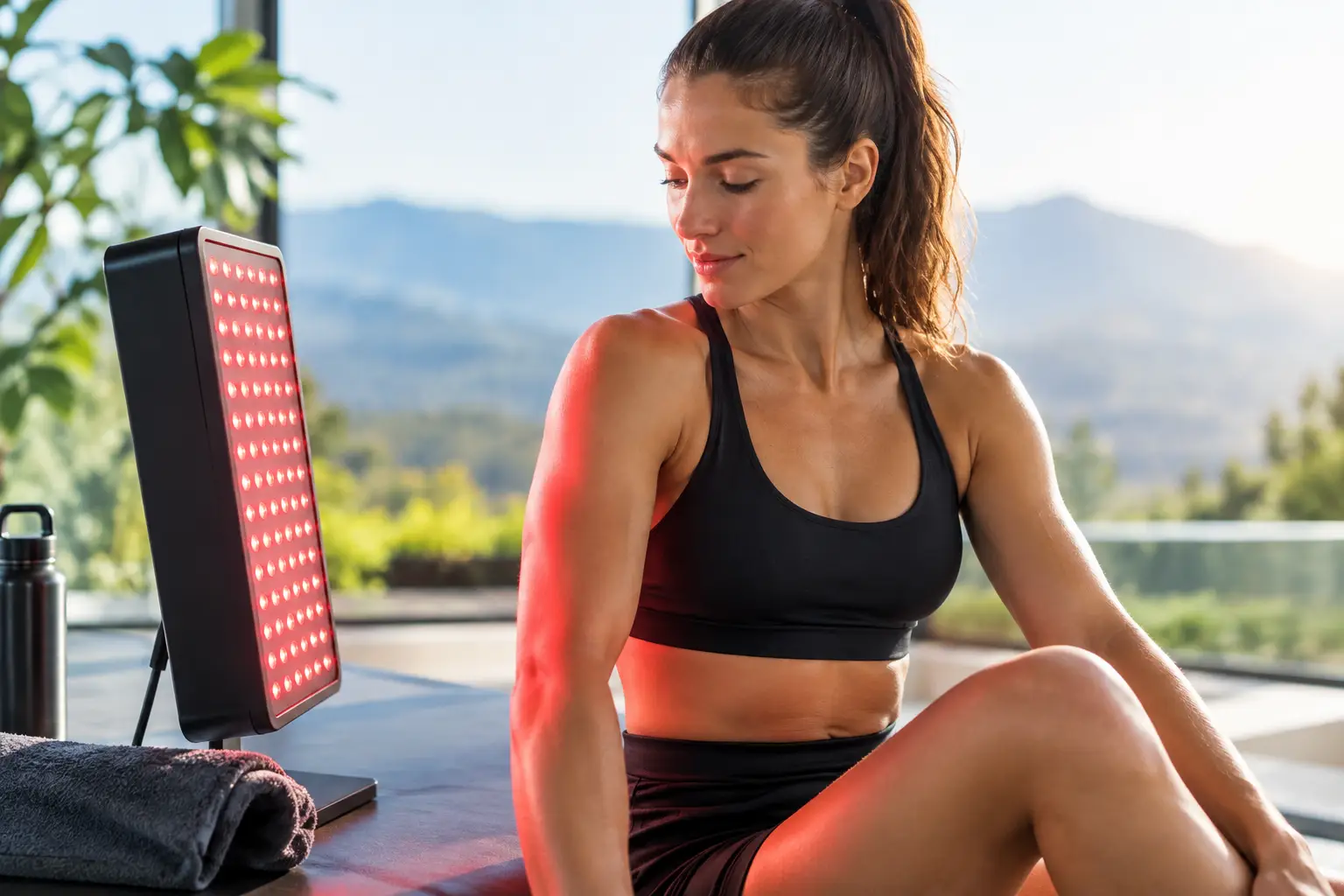
A hard training block rarely fails because an athlete lacks motivation. More often, recovery cannot keep pace with workload. This athlete photobiomodulation case study examines what can happen when red and near-infrared light is introduced as a structured recovery practice, not as a last-minute fix after soreness has already taken over.
The case below is illustrative rather than a clinical trial. It reflects a realistic performance setting and shows how coaches, wellness professionals, and recovery-focused athletes can evaluate photobiomodulation with more clarity. The objective is not to promise instant performance gains. It is to create better conditions for tissue recovery, sleep quality, nervous system regulation, and consistent training.
The Athlete and the Recovery Problem
The athlete was a 32-year-old competitive recreational cyclist preparing for a six-week endurance event block. Training included four cycling sessions, two strength sessions, and one mobility-focused recovery day each week. Total training time averaged nine to eleven hours weekly, with the highest-intensity rides scheduled on Tuesday and Saturday.
The challenge was familiar: the athlete could complete the planned sessions, but began the next day with persistent quadriceps heaviness, lower-quality sleep after evening training, and an increasing sense that recovery was becoming effortful. No acute injury was present. The concern was cumulative fatigue – the kind that gradually reduces training quality before it appears clearly in performance data.
Before adding photobiomodulation, the athlete maintained the same nutrition routine, hydration habits, training plan, and bedtime target for two weeks. This baseline period matters. Without it, it is easy to attribute every positive or negative change to a new wellness intervention when sleep, workload, travel, stress, or nutrition may be the real driver.
Athlete Photobiomodulation Case Study Protocol
The athlete used a red and near-infrared photobiomodulation system four times per week for six weeks. Sessions were scheduled after demanding training days and on one lower-load recovery day. The intention was to support recovery after training rather than replace fundamental practices such as adequate food intake, rest days, mobility work, and professional medical care when needed.
Each session lasted approximately 12 minutes per target area. The quadriceps, hamstrings, calves, glutes, and lower back received the primary focus. On evenings following high-intensity rides, the athlete completed the session at least one hour before bed, leaving enough time to shower, eat, and transition into a calmer nighttime routine.
Red light and near-infrared light are commonly used in photobiomodulation because they interact with biological tissues at different depths. In practical terms, these wavelengths are intended to support cellular energy processes and circulation-related recovery responses. The precise dose, distance, timing, and treatment area all matter. More exposure is not automatically better, and a poorly designed protocol can produce inconsistent results.
For this reason, the athlete did not add daily sessions immediately. Four weekly sessions provided enough consistency to observe a pattern while still allowing the protocol to fit a demanding but realistic schedule.
What Was Measured
Recovery should not be judged solely by whether an athlete feels good after one session. The athlete tracked a small set of practical indicators each morning and after key training days: perceived leg heaviness on a 1 to 10 scale, sleep quality on a 1 to 10 scale, resting heart rate, readiness to train, and power output during a standardized 20-minute cycling effort completed once per week.
The athlete also recorded contextual notes. A demanding workday, late caffeine intake, alcohol, unusually poor sleep, or additional walking could influence the outcome. These details prevented a simplistic interpretation of the numbers.
| Measure | Two-Week Baseline | Weeks 4-6 of Protocol | |—|—:|—:| | Average morning leg heaviness | 6.2/10 | 4.5/10 | | Self-rated sleep quality | 6.1/10 | 7.3/10 | | Resting heart rate | 54 bpm | 52 bpm | | Readiness to complete planned sessions | 71% | 86% | | Standardized 20-minute power | 238 watts | 244 watts |
These numbers should be read carefully. A 6-watt increase in a training block can reflect better recovery, normal adaptation, improved pacing, favorable conditions, or a combination of factors. This is not proof that light therapy alone increased power. The more meaningful finding was the athlete’s ability to complete planned work with less perceived heaviness and fewer adjustments to the weekly schedule.
The Most Useful Change Was Consistency
By the third week, the athlete reported that the legs felt less “flat” on the morning after interval sessions. This did not mean there was no fatigue. Productive training still creates fatigue, and athletes should not expect recovery tools to erase it. The difference was that the fatigue felt more manageable and less likely to disrupt the next planned workout.
Sleep was another meaningful observation. Evening sessions were not used as a sedative, and photobiomodulation should not be positioned as a substitute for treating insomnia. Yet the athlete described an easier transition from post-training alertness into a normal wind-down routine. Better sleep timing, consistent meals after training, and a deliberate reduction in screen exposure were also part of that change.
This is where wellness technology performs best: as part of an environment designed for recovery. The system can support the body, but the surrounding routine determines whether that support has room to work.
What the Case Does Not Prove
A single-athlete result cannot establish a universal outcome. Different athletes respond differently based on sport, training status, injury history, body composition, stress load, sleep debt, and the quality of their existing recovery habits. An athlete who is under-fueling or training through an untreated injury needs a different intervention than an athlete who simply needs better recovery structure.
There are also practical trade-offs. Professional-grade photobiomodulation requires an investment, a suitable space, and a protocol that people will actually follow. A device that sits unused after two weeks has little value, regardless of its specifications. For hotels, rehabilitation centers, high-performance spaces, and private wellness settings, ease of access and a calm, dedicated recovery environment can be as important as the treatment itself.
Photobiomodulation also has limits. It is not a diagnosis, a replacement for physical therapy, or a reason to delay medical evaluation for persistent pain, neurological symptoms, swelling, or a suspected injury. Athletes with health conditions, photosensitivity, or uncertainty about suitability should consult an appropriately qualified clinician before beginning a program.
Designing a Better Recovery Environment
The most effective recovery strategies are often the ones athletes can repeat without friction. A short, purposeful light session after training may be more sustainable than a complicated routine requiring multiple appointments and extensive preparation. That is especially relevant for busy professionals who train before work, travel frequently, or need to recover in limited windows between responsibilities.
For wellness operators, the opportunity is larger than placing a device in a room. A premium recovery experience can pair photobiomodulation with a thoughtfully designed setting that supports decompression: comfortable temperature, reduced visual noise, a quiet transition after exertion, and attention to the quality of the space itself. HealthWise approaches this principle by bringing regenerative red and near-infrared light together with nature-inspired, light-activated air revitalization in environments designed for daily well-being.
The goal is not to make recovery feel clinical or complicated. It is to make it accessible enough to become part of how people live, train, work, and restore their energy.
A Practical Standard for Future Cases
If an athlete, coach, or facility introduces photobiomodulation, the strongest approach is to begin with a defined goal. That may be improving the quality of recovery between strength sessions, supporting comfort after high-volume endurance work, or creating a more reliable evening wind-down routine. Choose two or three measures, keep the training plan relatively stable, and allow enough time to observe trends rather than chasing daily fluctuations.
A well-run athlete photobiomodulation case study should include both data and lived experience. Numbers reveal direction. The athlete’s ability to train with confidence, sleep with greater ease, and maintain a sustainable rhythm reveals whether the protocol belongs in real life.
The most valuable recovery tool is not the one that promises the fastest transformation. It is the one that helps an athlete show up tomorrow with enough capacity to continue the work that matters.