
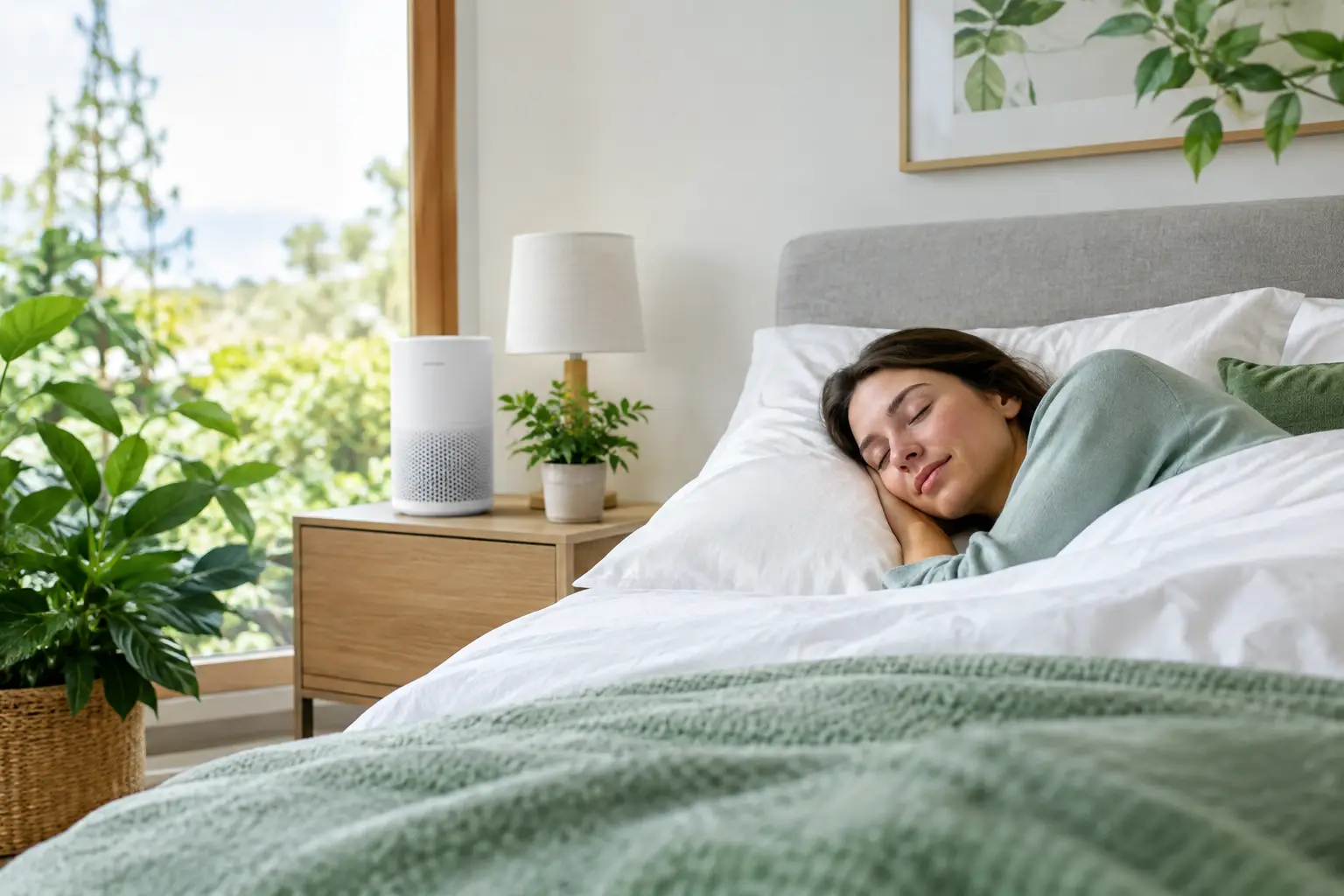
A congested morning can begin long before the alarm rings. Overnight, your bedroom becomes a concentrated micro-environment: bedding holds fibers and particles, fabrics collect dust, humidity shifts, and airflow slows behind closed doors. Well-designed allergy friendly bedrooms address those conditions with practical choices that help the space feel calmer, cleaner, and more supportive of restorative sleep.
For families, wellness-focused homeowners, and hospitality professionals, the goal is not to create a sterile room. It is to reduce common irritants, simplify maintenance, and build a sleep environment that supports everyday respiratory comfort without sacrificing warmth, design, or ease of living.
Why the Bedroom Deserves Special Attention
People spend roughly a third of their lives sleeping, often with their face close to a pillow, mattress, and layers of bedding. This makes the bedroom a high-impact place to manage common indoor triggers such as dust mite residue, pet dander, pollen brought in from outdoors, mold-related particles, and fragrances from cleaning or laundry products.
The effect is personal. One person may notice sneezing and a dry throat, while another experiences restless sleep, itchy eyes, or a heavy feeling on waking. Seasonal allergies can make the pattern more obvious, but year-round symptoms may point to the bedroom itself as a useful place to investigate.
A premium wellness environment should work quietly in the background. It should not require a complicated nightly ritual or turn a beautiful room into a clinical space. The most effective strategy is to focus on the materials closest to the sleeper, the room’s moisture balance, and the quality of the air occupants breathe for hours at a time.
Build Allergy Friendly Bedrooms From the Bed Outward
The bed is the logical starting point because it has the closest and longest contact with the body. Bedding does not need to be expensive to be effective, but it does need to be washable, durable, and easy to maintain consistently.
Choose mattress and pillow encasements designed to create a protective barrier around the filling. These covers are especially useful when replacing an otherwise comfortable mattress or pillow is not practical. Look for options that fit securely and remain breathable, since overheating can disrupt sleep just as much as nasal discomfort.
Wash sheets, pillowcases, and blankets regularly according to their care instructions. For many households, weekly washing is a sensible baseline, particularly during pollen season or when pets have access to the room. Use the warmest setting that the fabric can safely tolerate, then dry items thoroughly. Damp bedding creates the kind of conditions that can encourage unwanted microbial growth.
Material choice matters, although there is no single perfect fabric for everyone. Tightly woven cotton is simple and easy to wash. Linen can feel naturally breathable but may require more care to maintain its texture. Some people prefer synthetic performance fabrics for their fast drying properties. What matters most is whether the material can be cleaned frequently and feels comfortable enough to support consistent, uninterrupted sleep.
Pillows deserve closer review than they usually receive. Replace them when they no longer retain their shape, show persistent staining, or cannot be washed as directed. A pillow that supports the neck while remaining easy to protect and clean is usually a better investment than one selected only for initial softness.
Reduce Dust-Trapping Surfaces Without Making the Room Feel Bare
A bedroom can be visually layered without being filled with hard-to-clean textiles. The key is to distinguish between the pieces that add real comfort and the ones that mostly collect dust.
Wall-to-wall carpeting, heavy drapes, dense upholstered headboards, and open shelves packed with decorative objects all require more frequent cleaning. That does not mean every allergy-sensitive bedroom must have hard flooring and plain walls. It means the more textile-rich the room is, the more important a realistic maintenance plan becomes.
Consider washable window treatments or blinds that can be wiped down easily. If a rug is essential to the design, choose a smaller, low-pile option that can be cleaned thoroughly rather than a large, dense rug that is difficult to lift or maintain. Closed storage also has a quiet wellness advantage: it limits dust settling on clothing, books, and personal items.
In hotels, recovery suites, and guest rooms, this principle supports both guest comfort and operational efficiency. Fewer high-maintenance surfaces can make housekeeping standards easier to sustain while preserving the elevated look guests expect.
Manage Humidity and Fresh-Air Habits
Humidity has a direct influence on how a bedroom feels and performs. Air that is too dry can irritate the nose and throat. Air that remains too damp can create conditions favorable to dust mites and mold. A humidity monitor can offer useful clarity, especially in rooms with condensation on windows, a musty smell, or recurring dampness near exterior walls.
Many homes aim for an indoor humidity range of about 30% to 50%, though the ideal point depends on climate, building design, and season. If moisture is persistently high, address the source rather than masking the symptom. Check for leaks, insufficient bathroom exhaust, damp laundry, or poor insulation around windows.
Fresh-air habits also require judgment. Opening windows may feel refreshing, but during high-pollen periods it can bring more outdoor allergens directly into the bedroom. In those weeks, it may be more comfortable to keep windows closed at the times pollen levels tend to peak, then refresh the room when conditions are more favorable. Outdoor shoes, jackets, and pets can also carry pollen indoors, so a simple entry routine makes a meaningful difference.
Choose Cleaning Practices That Do Not Add New Irritants
An allergy-aware room can be undermined by strongly scented sprays, fragranced laundry products, or cleaning methods that send settled dust back into the air. The goal is not aggressive cleaning. It is effective, low-residue cleaning performed consistently.
Use a damp microfiber cloth for hard surfaces so particles are captured rather than scattered. Clean under the bed, behind nightstands, and around headboards, where dust can accumulate unnoticed. When vacuuming, move slowly enough to collect debris from floor edges and textile surfaces.
For sensitive occupants, fragrance-free laundry and cleaning products may be a more comfortable choice. This is particularly relevant in shared homes and hospitality settings, where different guests have different sensitivities. A neutral, well-maintained room generally feels more premium than one that relies on intense fragrance to signal cleanliness.
Do not overlook ventilation grilles, ceiling fans, and the top edges of doors. These are small details, but they influence how a room feels over time. A regular schedule is more effective than an occasional deep-cleaning marathon.
Consider the Whole Sleep Environment
Allergy comfort is not only about what is removed from a room. It is also about what supports recovery once the room is clean, quiet, and ready for rest. Light exposure, temperature, noise, and perceived air freshness all affect whether the body can settle into sleep.
A bedroom should have layered lighting that supports a slower evening rhythm. Bright overhead light can be practical for cleaning and dressing, while softer bedside lighting is better suited to winding down. Keep the sleeping area comfortably cool, and choose furniture placement that allows air to circulate around the bed rather than trapping it tightly against walls or oversized storage.
For people seeking a more integrated wellness approach, environmental technologies can be selected as part of the room’s overall recovery design. HealthWise brings together nature-inspired light-activated air revitalization with red and near-infrared photobiomodulation systems, creating wellness spaces that consider both the environment around the sleeper and the regenerative routines within it. These technologies are not substitutes for medical evaluation or core allergen-control practices, but they can complement a thoughtfully designed space focused on breathing comfort, relaxation, and restoration.
This integrated approach can be especially valuable in boutique hospitality, spa and rehabilitation settings, and private homes where the room must serve more than one purpose. It can be a place for sleep, recovery after travel, quiet reading, and personal wellness rituals – all without adding visual clutter.
When Symptoms Continue Despite a Cleaner Room
If congestion, coughing, wheezing, skin irritation, or sleep disruption continue after improving the bedroom, consider speaking with a qualified healthcare professional. Allergies can have many sources, and similar symptoms may also relate to asthma, reflux, infection, or other health concerns.
It is also worth looking beyond the bedroom when needed. Pet access, moisture elsewhere in the property, worn HVAC filters, and fabrics in adjacent rooms can all affect the conditions in the space where you sleep. A better bedroom is often the highest-value starting point, not always the only change required.
The most successful allergy-friendly bedroom is one you can maintain with confidence: breathable bedding, manageable surfaces, balanced humidity, and a calmer sensory atmosphere. When each choice supports the next, the room becomes more than a place to sleep. It becomes a dependable setting for easier breathing, deeper rest, and more capable mornings.