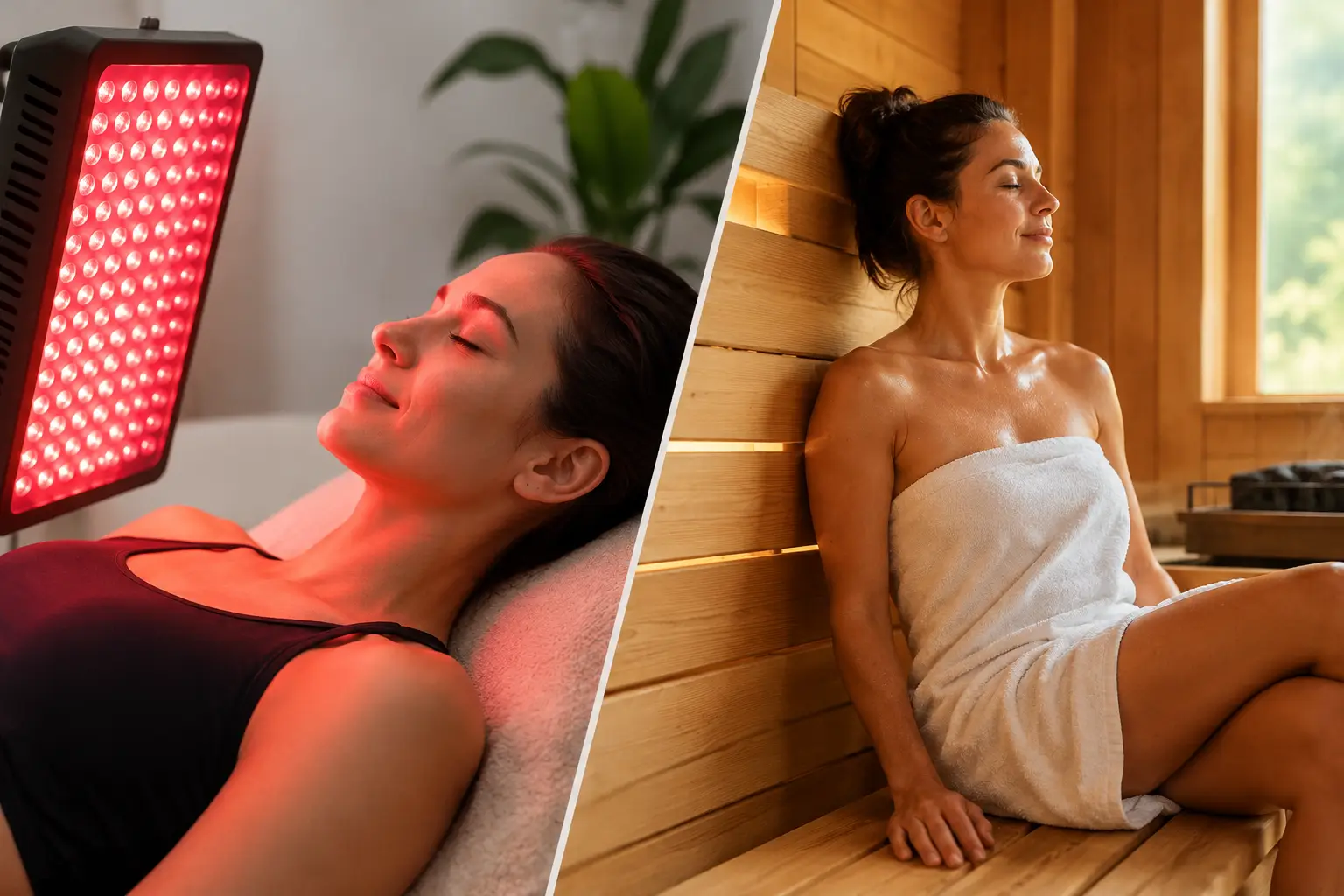
A sauna session changes the whole body quickly: skin warms, heart rate rises, and the mind often shifts out of work mode. Red and near-infrared light work differently. In the question of red light versus saunas, the better choice is rarely about which technology is more impressive. It is about the outcome you want, the environment you can create, and the routine you will actually maintain.
For a hotel wellness suite, rehabilitation setting, executive office, or health-focused home, that distinction matters. One modality is centered on heat exposure. The other uses specific wavelengths of light to support cellular processes without significantly raising body temperature. Both can belong in a thoughtful recovery environment, but they should not be treated as interchangeable.
Red Light Versus Saunas: The Core Difference
A traditional sauna uses dry heat, while steam rooms use humid heat. Both create a substantial thermal load. During a session, the body works to cool itself through increased circulation and sweating. Many people value that feeling of deep warmth, muscle ease, and post-session calm.
Red light and near-infrared photobiomodulation use non-ionizing light at targeted wavelengths. Red light generally acts more superficially, while near-infrared light can reach deeper tissue. The purpose is not to make the room hot or to induce heavy sweating. Instead, light energy is absorbed by cellular components, including mitochondria, where it may support normal energy production and signaling processes associated with tissue recovery.
That creates a practical divide. Saunas are primarily an experience of heat and relaxation. Photobiomodulation is a targeted, non-invasive recovery tool that can be used while remaining physically comfortable. A person who wants to decompress after a demanding day may prefer the enveloping warmth of a sauna. A person seeking a focused session before work, after training, or between appointments may find red and near-infrared light easier to fit into the day.
What Saunas Do Well
The strongest argument for a sauna is simple: it provides an unmistakable reset. The warmth can help loosen a sense of muscular tightness and encourage a transition into rest. For many users, sauna rituals also support better evening habits, especially when they replace late work, screens, or rushed routines with a dedicated period of quiet.
Regular sauna bathing has been associated in research with cardiovascular and well-being benefits, but context matters. Outcomes depend on temperature, session duration, hydration, baseline health, and consistency. A sauna is not a substitute for exercise, clinical treatment, sleep, or medical care.
Saunas also create a powerful hospitality experience. In a spa or premium hotel setting, heat communicates comfort immediately. Guests understand it without an explanation, and the ritual can feel generous and restorative. The trade-off is that a sauna requires warm-up time, ventilation, cleaning, energy management, and enough time for users to cool down afterward.
Heat is not appropriate for everyone. People who are dehydrated, ill, pregnant, prone to fainting, sensitive to heat, or managing cardiovascular conditions should seek individualized medical guidance before using a sauna. Alcohol and sauna use do not belong together. In professional environments, clear protocols are part of premium service, not an administrative detail.
Where Red and Near-Infrared Light Stand Apart
Photobiomodulation is especially compelling when recovery must be efficient, repeatable, and low-disruption. A session does not require the user to tolerate intense heat, shower afterward, or reserve a large part of the day. This makes it relevant in modern spaces where time and comfort are both valuable.
Users often choose red and near-infrared light to support muscle recovery, skin appearance, joint comfort, and general relaxation. The scientific literature is promising across several applications, yet quality matters. Benefits are influenced by wavelength, irradiance, dose, treatment area, distance from the device, and frequency of use. More light is not automatically better. An excessive dose may offer no additional benefit and can be counterproductive for certain goals.
This is why professional-grade systems should be selected and used with a clear protocol rather than as decorative ambient lighting. The user needs to know how long to use the device, how often, and at what distance. Eye protection guidance should follow the manufacturer’s instructions, particularly with bright devices or when treating the face.
For workplaces and wellness professionals, the low-heat nature of photobiomodulation has another advantage: it can be integrated into shorter appointments and recovery zones. It supports a calm, intentional pause without requiring people to change the pace of the entire day.
The Comfort Question
Not every recovery need calls for intensity. Some people love the ritual of sweating and would consider a no-heat light session incomplete. Others find high temperatures draining, inconvenient, or difficult to tolerate. That preference is not trivial. The best wellness system is one people will use consistently.
A light session may suit someone who wants to remain composed before a meeting, return to work without cooling down, or support a training routine without additional cardiovascular strain. A sauna may suit someone whose primary goal is a slower transition into relaxation. Neither response is more disciplined or more advanced. They serve different moments.
Choosing the Right Technology for the Setting
For private residences, the decision often comes down to space, schedule, and household needs. A sauna may become a cherished evening ritual for a family that has dedicated wellness space and enjoys heat. Red and near-infrared light may be the more flexible choice for a household that wants brief recovery sessions throughout the week.
In hotels, both technologies can elevate the guest experience, but they play different roles. A sauna supports a destination-style spa offering. Photobiomodulation can create a more accessible wellness touchpoint in a suite, fitness recovery area, or compact private treatment space. It is particularly valuable when guests want a focused wellness experience without the preparation and recovery time associated with heat.
For rehabilitation and performance centers, red and near-infrared systems can complement professional recovery protocols. They should not be presented as a cure for injury or as a replacement for assessment and treatment. Their value lies in being a non-invasive adjunct that can be applied consistently within a broader care plan.
Office environments deserve a different lens. A sauna is usually impractical during the workday. A well-designed light-based recovery space, however, can support a short reset before or after demanding work periods. When paired with a quiet, well-considered environment, it can encourage a healthier rhythm around concentration, stress, and recovery.
Can You Combine Red Light and Sauna Use?
Yes, many people use both, provided they are healthy enough for heat exposure and follow sensible protocols. The combination should be deliberate rather than excessive. A sauna can provide warmth and relaxation, while red and near-infrared light can offer a separate, targeted session for recovery support.
Timing depends on comfort and goals. Some users prefer light before a sauna because they are alert and comfortable. Others prefer the sauna first, followed by cooling down and using light later. There is no universal sequence proven to be best for every person. Hydration, heat tolerance, skin sensitivity, and total session load should guide the decision.
Avoid assuming that combining modalities doubles the result. Wellness is cumulative. Sleep quality, movement, nutrition, stress management, and a sustainable routine remain the foundation. Technology works best when it makes those foundations easier to protect.
A Practical Decision Framework
Choose a sauna when the priority is deep warmth, a slower ritual, and a strong sense of relaxation. Choose red and near-infrared photobiomodulation when the priority is targeted, low-heat recovery that fits into a busy schedule. Consider both when the space, budget, and user profile support distinct experiences rather than one device being asked to do everything.
At HealthWise, this principle shapes the idea of a complete wellness environment: natural-feeling conditions and regenerative technology should work together in ways that feel elegant, useful, and realistic for everyday life.
The most valuable choice is not the one that promises the most dramatic session. It is the one that gives people a reliable place to pause, recover, and return to what matters with more energy.