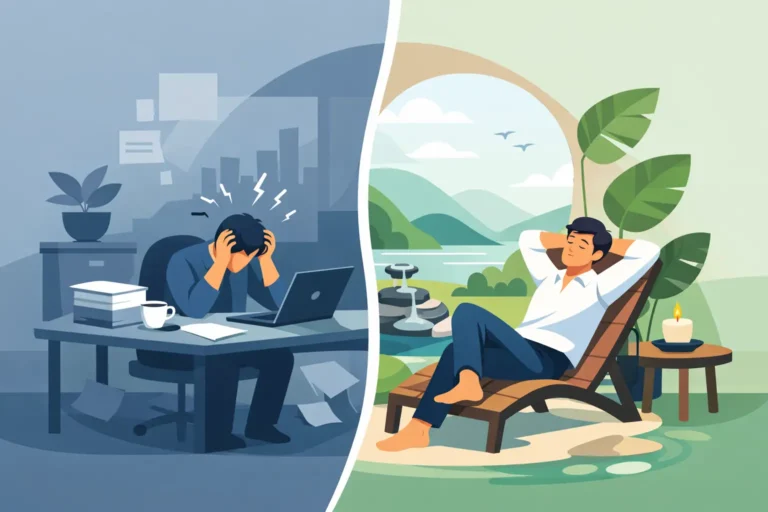
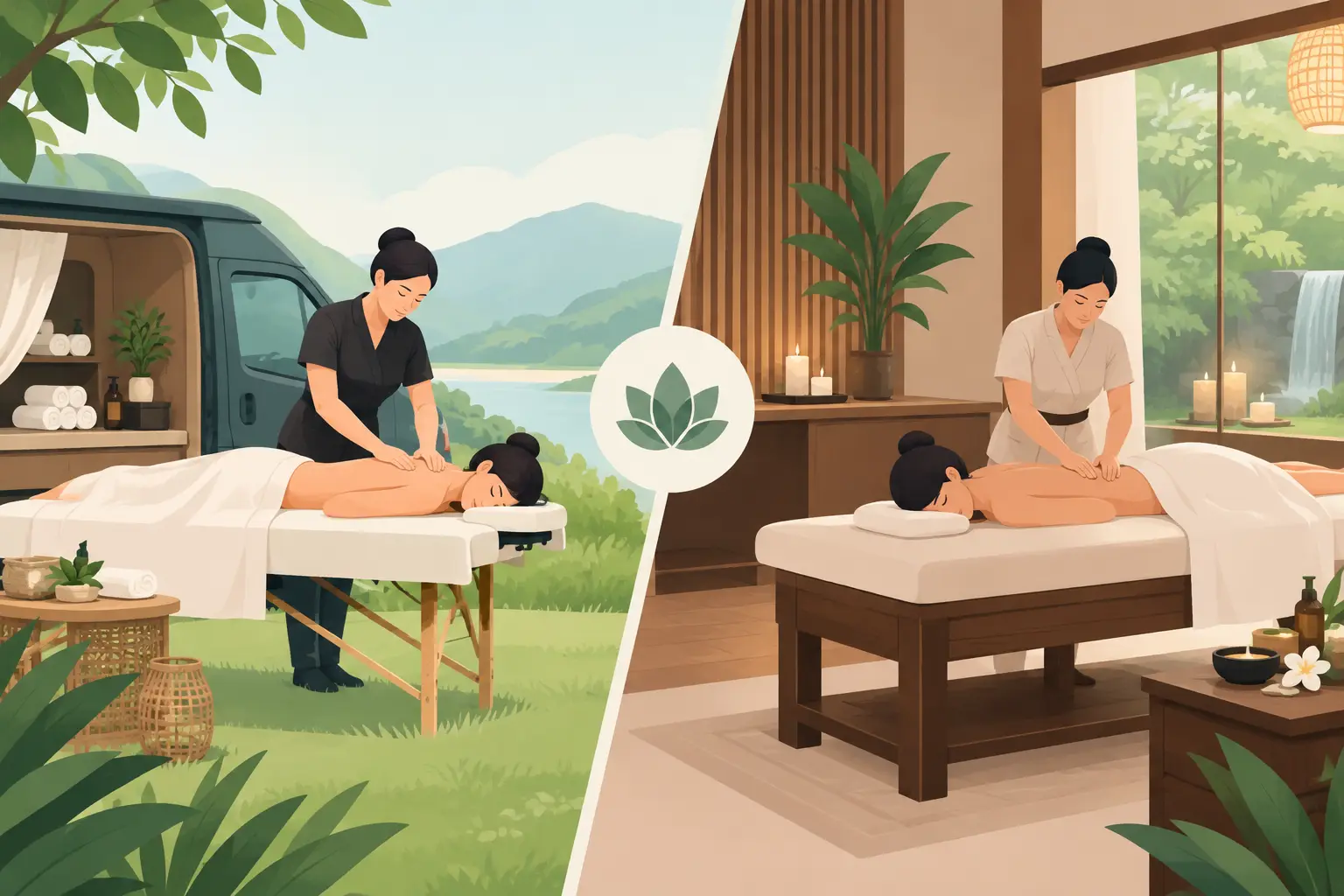
A spa appointment can be restorative, but it also asks for time: travel, scheduling, changing plans, and fitting recovery into a narrow opening in the day. The mobile spa vs traditional spa decision is really a decision about where wellness belongs in your life or business. Is it a destination you visit occasionally, or an environment available when recovery is needed most?
For many people, the answer is not simply one or the other. A traditional spa offers a complete escape. A mobile wellness concept brings consistent, private support closer to daily routines. The better choice depends on the outcome you value, the setting you control, and how often you want to access it.
What a Traditional Spa Does Best
A traditional spa is designed around separation. You leave your normal environment and enter a space intentionally shaped for calm, treatment, and sensory change. Reception rituals, quiet lounges, thermal areas, skilled practitioners, and a dedicated atmosphere can create a clear mental boundary between work and restoration.
That separation has real value. For someone who struggles to step away from obligations, a scheduled visit can make self-care feel more deliberate. A spa is also the natural choice for hands-on services that require trained professionals, such as massage, body treatments, facials, or specialized hydrotherapy. The human expertise is part of the experience.
For hotels, a full spa can be a powerful premium amenity. It may extend guest stays, create a distinct service category, and support a high-touch hospitality model. Rehabilitation and wellness centers can also benefit from a dedicated spa setting when treatments, staff oversight, and shared facilities are central to their offering.
The trade-off is access. Most people visit a traditional spa occasionally, not daily. Even an excellent treatment may have limited influence on a demanding routine if the beneficial conditions disappear as soon as the guest returns to a stressful room, office, or travel schedule.
Mobile Spa vs Traditional Spa: The Essential Difference
A mobile spa is not simply a smaller spa that travels. At its best, it is an integrated wellness environment that can be installed where people already spend time: a hotel room, private residence, executive office, recovery space, or professional wellness setting.
The emphasis shifts from occasional indulgence to repeatable recovery. Rather than waiting for a free afternoon, a person can create a focused wellness session before bed, after a long flight, between demanding meetings, or following physical activity. This is especially relevant for people who view wellness as preventive care and lifestyle design rather than an occasional reward.
Traditional spas are generally service-led. Mobile wellness is environment-led. One centers on visiting a place and receiving a treatment. The other centers on bringing carefully selected conditions and technologies into an existing space.
That difference matters because consistency is often more realistic than intensity. A 20-minute recovery ritual used several times each week may fit modern life better than a single, infrequent appointment. It does not replace the value of skilled spa therapists. It addresses a different need: making supportive wellness conditions easier to use regularly.
Convenience Is More Than Saving Travel Time
Convenience can sound superficial, but for high-performing professionals, families, and travelers, it is often the deciding factor. Wellness practices only create lasting value when they can be repeated without becoming another obligation.
A mobile setup removes the friction around access. There is no commute, no check-in process, and no need to build an entire day around a booking. In a hotel context, this can be particularly meaningful. A guest arriving late after international travel may not be able to visit the hotel spa during operating hours, yet may still want a private period of calm and recovery before sleep.
For office space managers, mobile wellness can support short, intentional pauses without requiring employees to leave the building. For families, it can establish a more restorative home routine. For wellness professionals, it can expand the type of environment they provide without relying solely on treatment rooms and appointment capacity.
Still, convenience should not be confused with automatic quality. A mobile wellness space must feel considered, safe, and easy to use. If technology is complicated, visually intrusive, or disconnected from the room’s purpose, it can add stress rather than reduce it. Premium wellness works when design and function reinforce each other.
Privacy, Personalization, and Control
Privacy is one of the strongest advantages of a mobile spa environment. Some people enjoy the social energy of a spa. Others want restoration without shared changing rooms, unfamiliar spaces, or the pressure of being on someone else’s schedule.
In a private setting, the user controls the timing, lighting, sound, and pace. There is no need to rush through a relaxation period because another guest is waiting. This can be valuable for people managing high stress, disrupted sleep, frequent travel, or sensory overload.
Personalization also becomes more practical. A hotel can tailor a wellness-equipped room category for guests seeking recovery and better rest. A wellness center can create a dedicated regeneration room. A private client can build a routine around the times of day when calm, focus, or post-exercise recovery are most needed.
The limitation is that private systems do not provide the same interpersonal ritual as a therapist-led treatment. If your main goal is expert touch, consultation, and the feeling of being cared for by a practitioner, a traditional spa remains difficult to replace. If your goal is autonomy and repeatable access, a mobile approach has a clear advantage.
The Role of Technology in Everyday Recovery
The most effective mobile wellness concepts do more than add a relaxing object to a room. They bring complementary elements together with a clear purpose: supporting the quality of the environment and the body’s natural recovery processes.
HealthWise combines Forest Air’s nature-inspired, light-activated air revitalization with Nircura’s red and near-infrared photobiomodulation technology. The intention is not to imitate a conventional spa treatment menu. It is to create an elegant, practical setting that supports calm, regeneration, and everyday well-being in the places where people live, stay, and work.
Red and near-infrared photobiomodulation is widely used in wellness settings as a non-invasive approach that may support recovery-focused routines. Its appeal is practical: sessions can be integrated into a schedule without demanding extensive preparation. When paired with an environment designed for slower breathing and decompression, the experience becomes more complete than a standalone device.
Technology should always be approached responsibly. Individual experiences vary, and wellness technology is not a substitute for medical diagnosis or treatment. People with health conditions, photosensitivity concerns, or questions about suitability should seek guidance from an appropriate health professional before beginning a new protocol.
Which Model Makes Sense for Hotels and Wellness Businesses?
For hospitality leaders, the question is not whether a traditional spa is better than a mobile spa in every circumstance. It is whether the guest experience has meaningful recovery touchpoints beyond the spa floor.
A full-service spa remains a signature asset for many luxury properties. Yet wellness-equipped rooms can extend the guest experience into mornings, late evenings, and periods when visitors prefer privacy. They can also differentiate a property without requiring every guest to reserve a therapist or leave their room.
For spa operators and rehabilitation centers, mobile systems can complement existing services. A guest may use a regeneration space before or after a professional treatment. The business gains a flexible wellness offering that supports client education, creates additional premium experiences, and makes better use of available rooms.
The commercial case is strongest when the technology fits the brand promise. A luxury hotel should not present wellness equipment as a novelty. A professional center should not make vague claims. In both cases, the message should be simple: this environment is designed to make recovery more accessible, private, and repeatable.
Choosing Based on the Outcome You Want
Choose a traditional spa when you want a complete change of scene, hands-on treatment, social amenities, and professional services delivered in a dedicated destination. It is ideal for special occasions, deep relaxation days, and treatments that depend on skilled practitioners.
Choose a mobile wellness environment when frequency, privacy, and integration matter more. It is well suited to travelers, busy professionals, wellness-focused households, hotels seeking room-level differentiation, and businesses that want to make regeneration part of the daily environment.
The most forward-looking wellness strategy may include both. A traditional spa can provide the memorable, high-touch experience. A mobile spa concept can make the space between appointments more supportive. That is where wellness stops being an event on the calendar and becomes a quality built into everyday life.
The best environment is the one people will genuinely use. When recovery is close, intuitive, and aligned with the rhythm of real life, taking care of well-being becomes less of a promise and more of a practice.