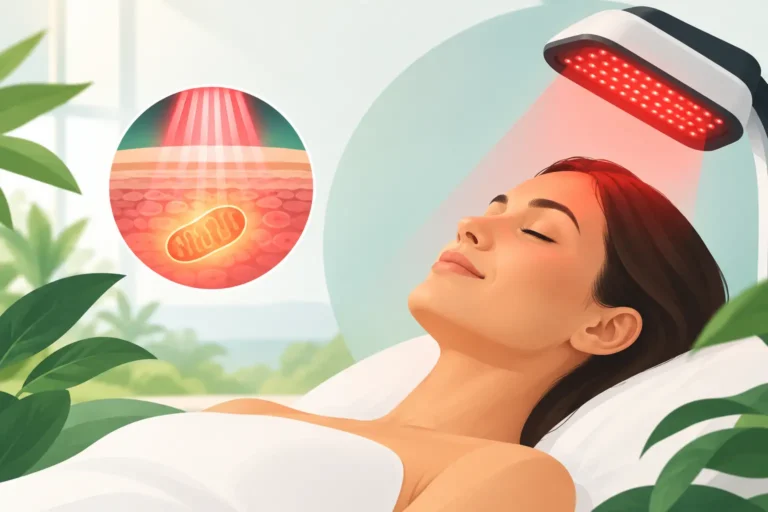
A red-light session should feel restorative, not like a test of how long you can keep your eyes open. So, does red light affect eyes? Yes. Its effects depend on the wavelength, brightness, distance, exposure time, and whether the light is designed for general wellness or directed clinical use. Red light is not automatically harmful, but neither is every red or near-infrared device appropriate to stare into.
For people bringing photobiomodulation into a home, hotel, recovery space, or professional wellness setting, the practical question is not simply whether red light is safe. It is whether the system is designed, positioned, and used in a way that respects the eye’s sensitivity while supporting a calm, useful experience.
Does Red Light Affect Eyes Differently Than Other Light?
Visible red light generally sits at the longer-wavelength end of the visible spectrum. Many wellness devices use red wavelengths around 630 to 660 nanometers, often alongside near-infrared light around 810 to 850 nanometers. Near-infrared light cannot be seen, but it can still reach tissue and deliver energy.
The eye responds differently to different parts of the spectrum. Blue-rich light is particularly relevant to alertness and circadian timing because it strongly activates retinal pathways involved in suppressing melatonin. Red light usually has a much smaller effect on these pathways. That is why dim red lighting is often used where people want to preserve a darker, more sleep-friendly evening environment.
But “less disruptive than blue light” is not the same as “without effect.” A very bright red source can still cause glare, visual discomfort, temporary afterimages, or headache in sensitive people. The retina does not judge light by color alone. It responds to the total optical energy reaching it, how concentrated that energy is, and how long exposure lasts.
Brightness, Beam Pattern, and Distance Matter Most
A small indicator light and a high-output photobiomodulation panel may both look red, yet they create very different exposure conditions. This distinction is essential.
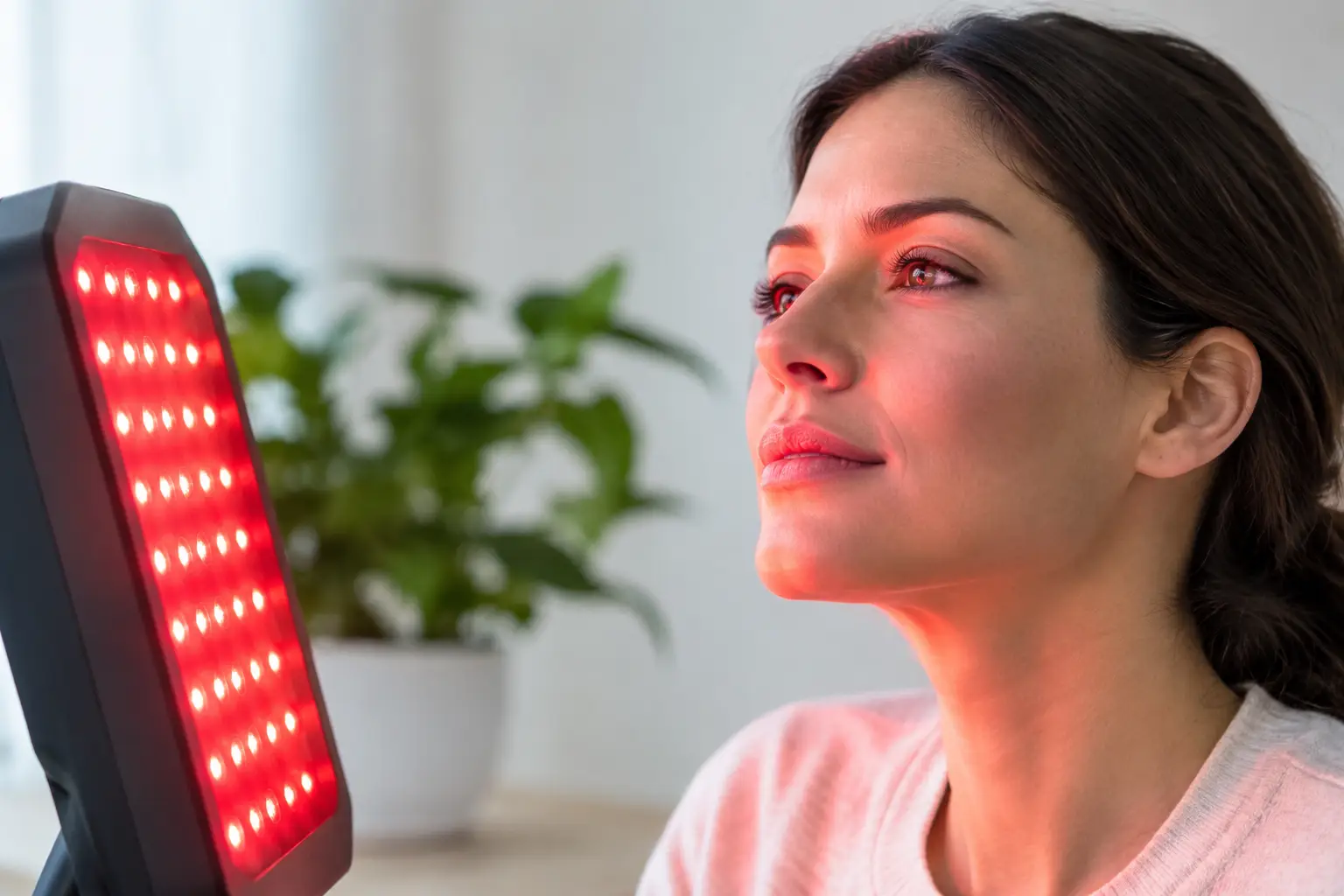
LED wellness systems typically spread light across a broad treatment area. Lasers, by contrast, can produce a highly concentrated beam and require more specific safety controls. Even among LED devices, output varies considerably. A panel placed close to the face produces a far more intense experience than one positioned at a greater distance, and direct viewing increases the light entering the eye.
The device’s irradiance, or power delivered over an area, helps determine its dose. Session duration then adds to that dose. More is not always better. Excessive exposure may produce discomfort without improving the intended wellness result. A quality system should provide clear guidance for distance, session length, intended body areas, and whether eye protection is recommended.
For shared environments such as spas, rehabilitation centers, and hotels, this is not a minor detail. Clear positioning guidance makes the experience feel premium and considered while reducing user uncertainty. A guest should never have to guess where to stand, whether to look toward the panel, or how long a session should last.
Should You Wear Eye Protection During Red Light Therapy?
It depends on the device, the treatment area, and the manufacturer’s directions. There is no universal answer that applies to every red-light system.
When a device is used on the body and the face is outside the treatment zone, avoiding direct eye exposure is straightforward. When light is used near the face, some people can comfortably keep their eyes closed. Closed eyelids reduce exposure, but they do not block all light, especially at high intensities. Purpose-designed blackout goggles or other supplied protection may be appropriate when the device instructions call for them.
Protection is particularly relevant when a device is unusually bright, positioned close to the face, includes near-infrared output, or produces discomfort even with eyes closed. Do not assume that ordinary sunglasses provide meaningful protection. Their performance depends on the lens material and the wavelengths involved, not simply on how dark they look.
Avoid looking directly into LEDs or any laser aperture. Direct viewing is not needed for a useful session, and it is not a shortcut to better results. If a system makes you squint, see spots afterward, or experience persistent visual fatigue, increase the distance, reduce the session time, use suitable protection if advised, or stop using it until you can review the instructions.
What About Red Light for Eye Health?
This is where precision matters. Research into retinal photobiomodulation is an active area of clinical interest. Certain controlled protocols have explored whether specific red or near-infrared exposures may support aspects of retinal metabolism or visual function in particular populations. These studies are promising, but they do not mean that every consumer red-light panel is an eye treatment.
The retina is specialized neural tissue. Eye-focused protocols require carefully selected wavelengths, dose, timing, and clinical context. They may also exclude people with particular eye conditions. A wellness device intended for skin, muscle recovery, or general relaxation should be used only as directed, not repurposed as a treatment for vision concerns.
Anyone managing macular degeneration, diabetic eye disease, glaucoma, retinal disorders, recent eye surgery, unexplained changes in vision, or severe light sensitivity should speak with an eye-care professional before using red or near-infrared light near the face. The same caution applies to people taking medications that increase photosensitivity. A clinician can assess the full picture, including medical history and current treatment.
Red Light at Night: Helpful Context, Not a Free Pass
Red light can be a thoughtful choice for evening wellness because it is generally less stimulating to circadian pathways than bright blue or cool white light. In a recovery environment, a low-glare red ambiance may help maintain a quieter visual setting before rest.
However, intensity still matters. A brilliant red panel used inches from the face late at night may feel activating simply because it is bright. It can also be uncomfortable after a long day of screen use, dry eyes, migraine sensitivity, or poor sleep. The best evening setup is usually intentional: moderate brightness, a comfortable viewing angle, no direct staring, and a session schedule that feels settling rather than stimulating.
This is also why room design matters as much as the device itself. Light should support the purpose of the space. In a recovery room, it should be easy to relax, breathe, and follow a simple routine without visual strain or confusing controls.
A Safer, More Comfortable Way to Use Red Light
Start with the manufacturer’s recommended distance and session duration rather than improvising a longer session. Position the device so it treats the intended area without requiring direct eye contact. If the face is near the panel, close your eyes or use the protective eyewear specified for that system.
Pay attention to your individual response. Mild warmth or brightness may be expected depending on the equipment, but pain, lingering afterimages, headache, worsening dry-eye symptoms, or any change in vision are reasons to stop and seek professional advice. Children should not use high-output light devices unsupervised, and a professional setting should provide straightforward instructions before every session.
A well-designed wellness environment makes these habits easy. At HealthWise, the goal of integrating red and near-infrared photobiomodulation into a broader recovery experience is not to overwhelm the senses. It is to make advanced wellness feel natural, practical, and appropriately guided.
The Bottom Line for Everyday Use
Red light affects the eyes, but the effect is shaped far more by dose and design than by the fact that the light appears red. Dim red ambient lighting and a high-output treatment device are not interchangeable. The first may suit a relaxed evening setting; the second deserves clear operating guidance, especially around the face.
Choose systems with transparent specifications and practical safety instructions. Use light as a supportive part of recovery, not as something to endure or experiment with at maximum intensity. When the experience is comfortable, correctly positioned, and aligned with your needs, red light can remain what it should be: a considered element of a modern wellness routine.