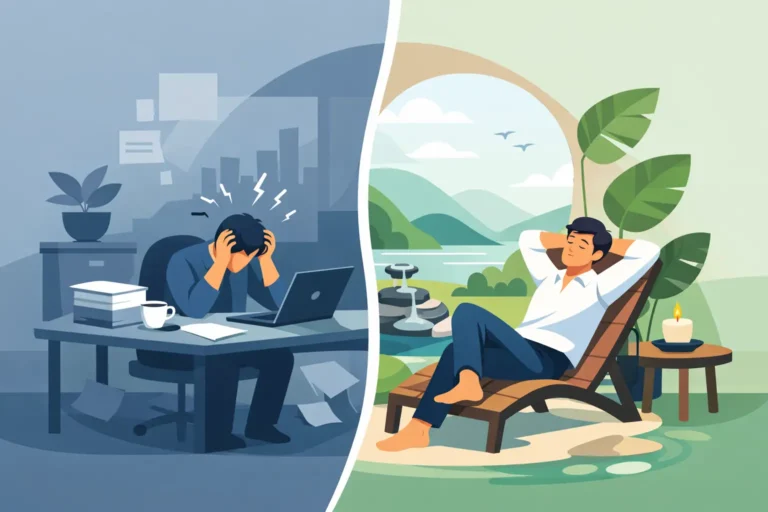
The 3 p.m. slump is rarely just a productivity issue. It is often the visible result of stale-feeling rooms, prolonged sitting, screen-heavy work, compressed deadlines, and too little space for genuine recovery. Natural workplace wellness solutions address that wider picture by improving the environment people work in and giving them practical ways to reset within it.
For office managers, hotel operators, wellness professionals, and business owners, the question is not whether well-being matters. It is whether the approach feels credible, usable, and worthy of the investment. A bowl of fruit in the kitchen or a single annual wellness event may be welcome, but neither changes the daily conditions that shape energy, focus, comfort, and recovery.
Why the Workplace Environment Deserves More Attention
People do not experience work only through tasks and meetings. They experience it through their senses and physiology: the quality of the air around them, the intensity and timing of light, the noise level, the ability to move, and whether there is any opportunity to pause without leaving the building.
That is why workplace wellness should be designed as an environment rather than treated as a perk. A well-considered setting can make demanding days feel more manageable. It can support moments of calm between meetings, encourage clearer thinking, and help people transition out of a high-alert state after sustained concentration.
This does not mean every office needs to become a spa. In fact, overly decorative wellness initiatives can undermine trust when they fail to connect with real working patterns. The strongest concepts are discreet, grounded in functional benefits, and easy to incorporate into the rhythm of the day.
For hotels, the same principle extends to guest experience. Travelers may arrive fatigued, jet-lagged, overstimulated, or simply in need of better rest. A room or dedicated wellness space that supports breathing, relaxation, and recovery creates value that feels personal rather than promotional.
Natural Workplace Wellness Solutions Start With Daily Conditions
The most effective programs focus on the factors people encounter repeatedly. Rather than asking employees to add another appointment to their calendar, they make healthy choices and restorative moments more available during ordinary work.
Create space for breathing and mental reset
A workplace can feel busy without being chaotic. Small design decisions matter: a quiet corner away from calls, comfortable seating, natural textures, softer visual surroundings, and a policy that protects short breaks from being treated as wasted time.
The goal is not silence at all costs. It is offering a place where the nervous system can step down from constant stimulation. Even a few minutes away from notifications and conversation can help employees return to focused work with greater composure.
Nature-inspired air revitalization can add a meaningful dimension to these spaces. Forest Air’s light-activated air breathing technology is designed to bring the restorative character people associate with natural environments into contemporary interiors. For organizations seeking a differentiated wellness setting, it provides a sensory and environmental layer that goes beyond visual design alone.
Use restorative light with purpose
Light affects how a space feels and how people use it. Bright task lighting may be necessary for detailed work, while recovery areas benefit from a calmer atmosphere. The best approach is intentional zoning, not one lighting solution for every activity.
Red and near-infrared photobiomodulation is another option for dedicated wellness and recovery areas. This non-invasive technology uses specific wavelengths of light and is widely used in wellness settings to support recovery routines and relaxation. It should be communicated responsibly: outcomes vary by person, protocol, and individual health context, and it is not a replacement for medical advice or care.
For a business, the practical advantage is clear. A thoughtfully positioned photobiomodulation system creates a defined moment of restoration before a demanding day, during a break, or after travel and training. For a premium hotel, it can also turn an unused room into a memorable, wellness-led amenity.
Make movement normal, not performative
Employees do not need a compulsory group workout to benefit from movement. They need permission and opportunity to change position, walk briefly, stretch, or hold a meeting away from their desks.
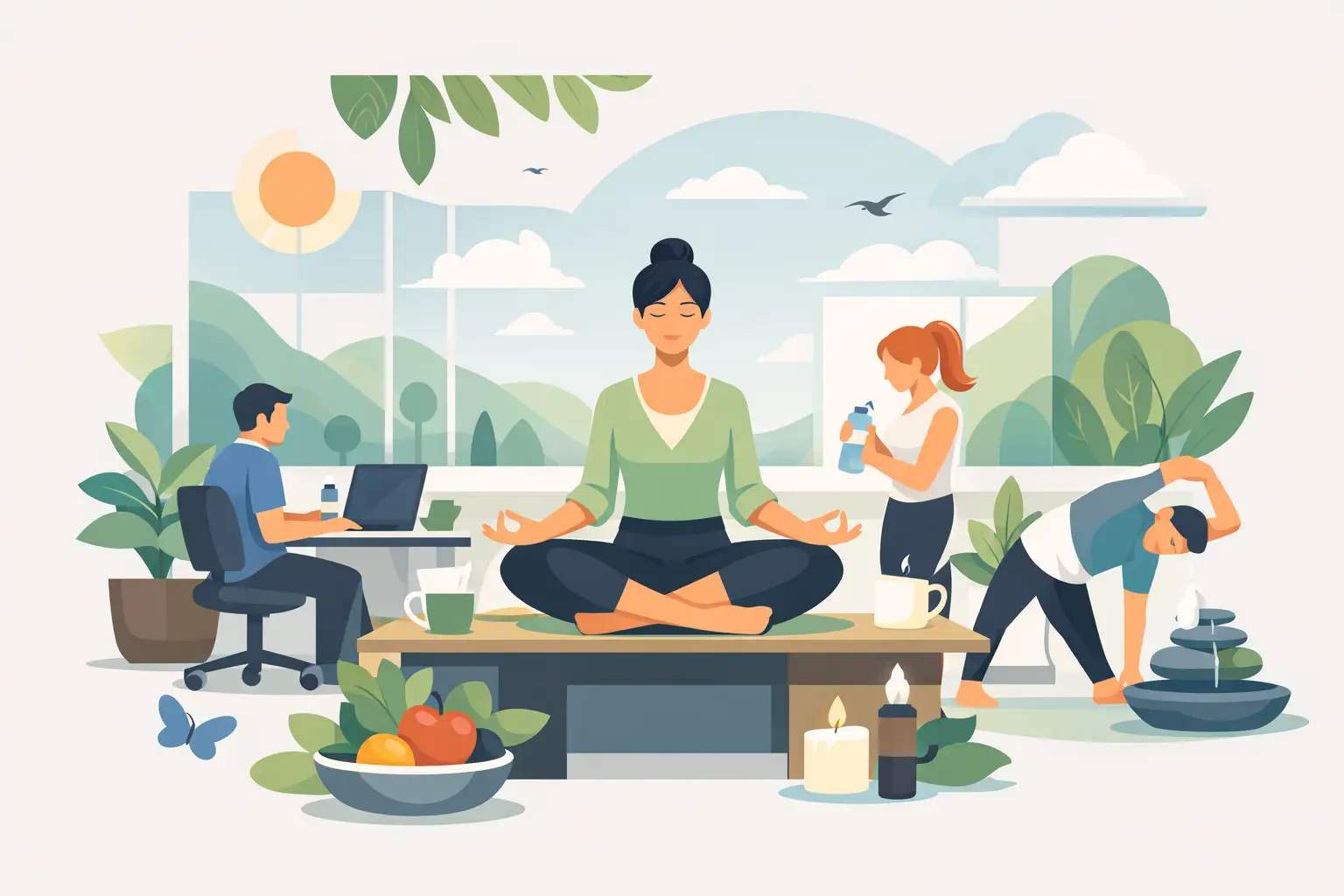
Workplace design can support this through walking routes, sit-stand workstations where appropriate, accessible stairways, and meeting formats that do not require everyone to remain seated for an hour. Leaders set the real standard here. When managers visibly take breaks and avoid rewarding constant availability, wellness becomes part of the culture rather than a poster on the wall.
How to Choose Natural Workplace Wellness Solutions
Before purchasing technology or redesigning a room, identify the problem you are trying to solve. A fast-growing company with meeting fatigue needs something different from a rehabilitation center serving clients with established recovery routines. A hotel may prioritize sleep quality and guest decompression, while a design studio may be focused on sustained attention and stress management.
Start by observing how people actually use the space. Are there times when the office becomes noisy and tense? Do workers have a private place to reset? Are guests asking for more recovery-oriented amenities? Does the existing wellness offer feel disconnected from daily life?
Then evaluate solutions against three practical standards: relevance, ease of use, and integration. Relevance means the system addresses a genuine need. Ease of use means people can understand it without lengthy instruction. Integration means it fits the room, schedule, brand, and operational capacity.
A premium wellness installation should not create a maintenance burden that staff cannot sustain. Nor should it be hidden in a room that nobody visits. Visibility, clear guidance, and thoughtful placement often determine whether a good technology becomes a valued daily resource.
An Integrated Wellness Space Has Greater Value
Standalone products can serve a purpose, but they often place the responsibility on the individual to create their own ritual. An integrated environment does more. It combines the atmosphere of the room with tools that invite a specific experience: pause, breathe, restore, return.
HealthWise brings this approach together by pairing Forest Air’s nature-inspired air revitalization with Nircura’s red and near-infrared photobiomodulation technology. The result is designed as a coherent wellness environment for offices, hotels, private homes, spas, and rehabilitation settings.
This matters because people respond to the complete experience. A quiet, well-designed room with restorative air and light-based recovery tools communicates that wellness is not an afterthought. It becomes a practical part of how the organization cares for guests, clients, and teams.
There are trade-offs to consider. Dedicated wellness spaces require floor area, investment, staff orientation, and realistic expectations. Smaller businesses may begin with one multipurpose recovery room, while larger offices or hotels may benefit from several tailored zones. The right scale depends on traffic, goals, and the level of service an organization wants to provide.
Make Wellness Credible Through Education and Choice
People are more likely to use a wellness resource when they understand what it is for. Clear, concise education is better than exaggerated promises. Explain how to use the space, when a short session may fit into the day, and what employees or guests can reasonably expect from the experience.
Choice is equally important. Some people will welcome a quiet recovery session; others may prefer a walk, a breathing break, or a more active reset. A strong workplace program offers options without creating pressure to participate.
For wellness professionals and hospitality teams, training has a direct commercial benefit. Confident staff can explain the experience with accuracy, maintain a premium standard, and guide clients toward the option that best suits their goals. This turns technology from an impressive feature into a service people remember.
The most valuable workplace wellness environments do not demand that people become different versions of themselves. They recognize that modern work can be intense, then provide a more intelligent place to recover within it.