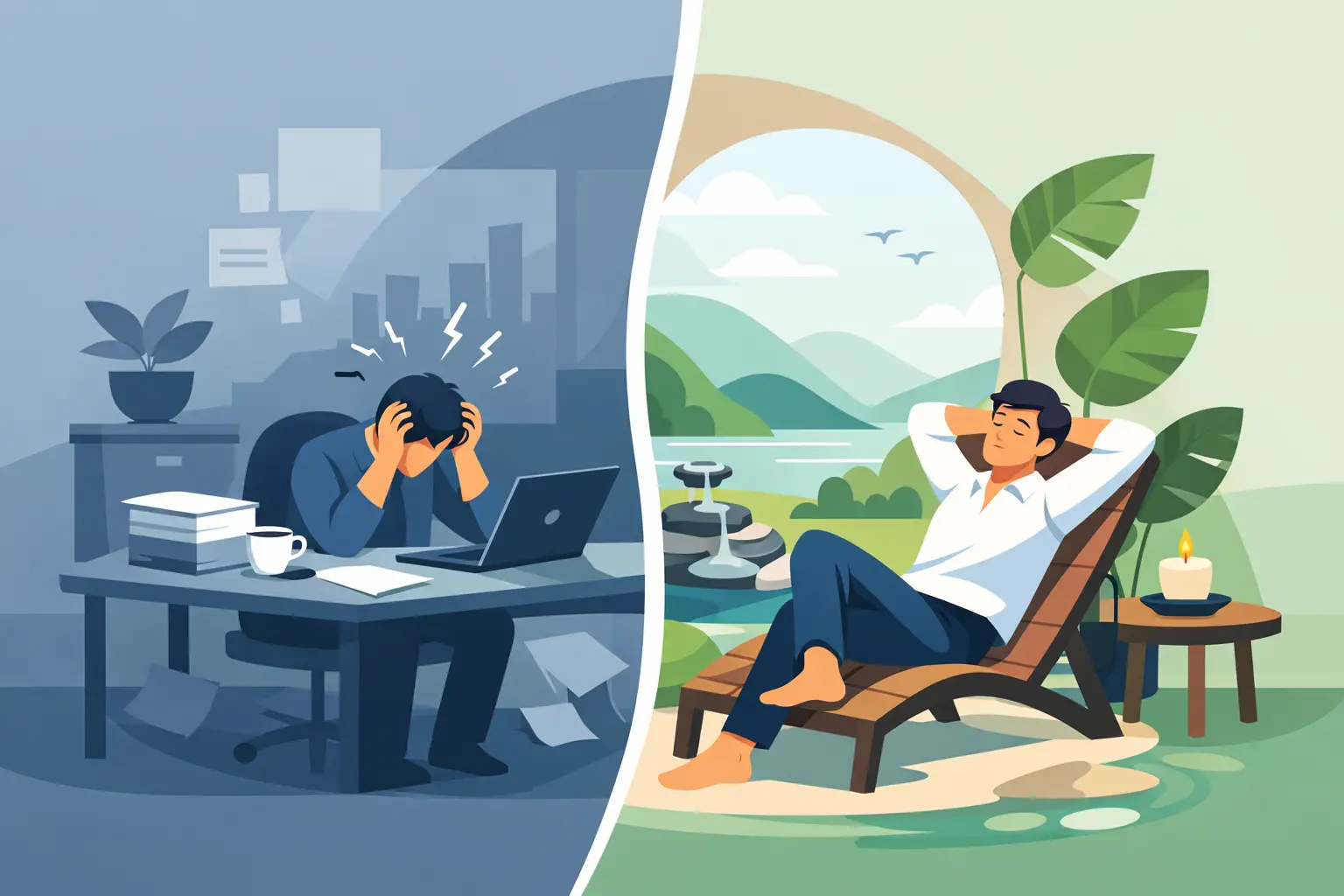
The cost of workplace stress rarely appears in one dramatic moment. It shows up as the experienced manager who cannot focus after lunch, the hotel guest who sleeps poorly before an early meeting, or the employee who takes work tension home night after night. Effective workplace stress recovery systems address this reality by making restoration part of the environment and daily rhythm, rather than an occasional perk.
Stress cannot be removed from every ambitious workplace. Deadlines, decisions, travel, client expectations, and responsibility are part of professional life. What leaders can change is whether people have a practical way to shift out of prolonged activation and return to a more balanced state.
Why Recovery Needs a System, Not a Gesture
A coffee machine, a meditation app, or an annual wellness day can be appreciated, but none creates a reliable recovery culture on its own. Stress accumulates through repeated exposure. Recovery must therefore be accessible, repeatable, and easy to use when people actually need it.
A well-designed system combines three elements: an environment that feels supportive, simple practices that interrupt pressure during the day, and leadership habits that make recovery acceptable rather than symbolic. If one piece is missing, the result is often underused. A beautiful wellness room that employees feel guilty using does not solve much. Nor does a manager encouraging breaks in a space that remains overstimulating and uncomfortable.
The purpose is not to make the workplace passive. It is to help people regain clarity, steadier energy, and the capacity to respond thoughtfully under pressure. For organizations, this can support stronger concentration, better interactions, and a more sustainable standard of performance.
The Foundations of Workplace Stress Recovery Systems
The most credible systems begin with the conditions people experience every day. Light, air quality, noise, privacy, temperature, movement, and workload all influence how easily the nervous system settles after demanding work. There is no universal setup, because a call center, executive office, rehabilitation center, and hotel each create different stress patterns. Yet the principles are consistent.
Create a physical signal of recovery
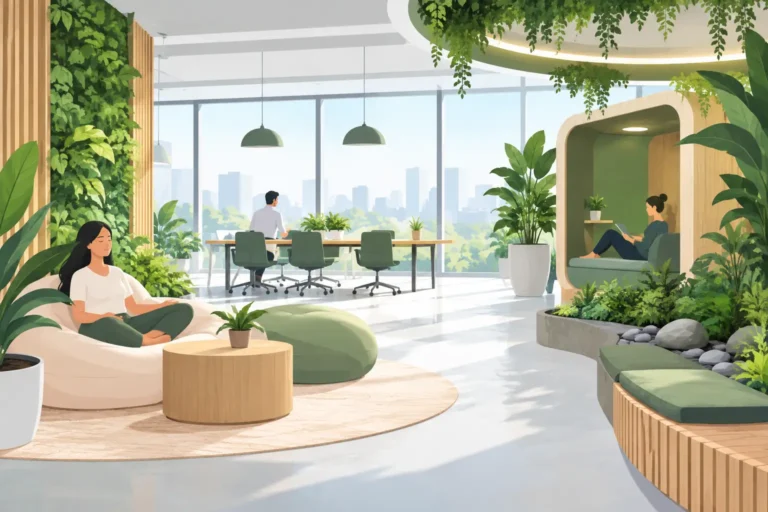
People need spaces that tell them, without explanation, that it is safe to pause. This does not require converting an entire floor into a spa. A quiet room, a recovery suite, or a carefully designed wellness zone can be enough when it is intentional.
The best spaces reduce unnecessary sensory friction. They offer comfortable seating, calm visual design, controlled lighting, and a degree of separation from constant notifications and conversation. In premium hospitality, this same principle can be integrated into guest rooms, helping business travelers decompress without leaving their private space.
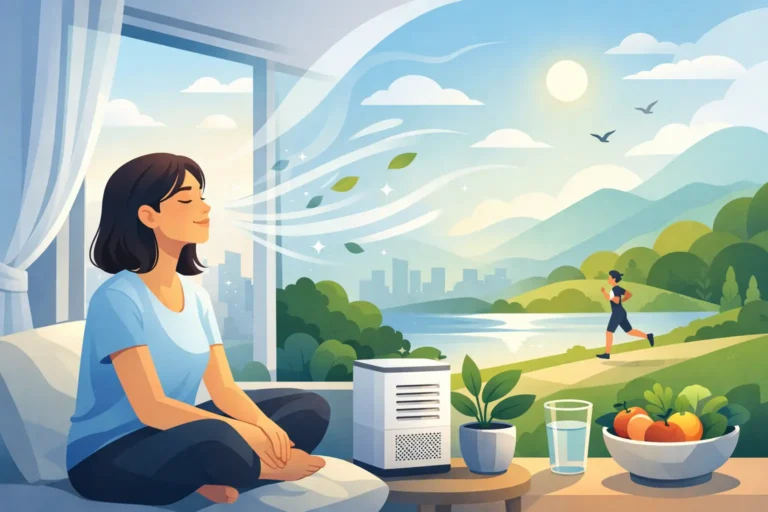
Nature-inspired environmental design can strengthen this effect. Forest Air’s light-activated air revitalization is designed to bring a more restorative quality to indoor environments, while red and near-infrared photobiomodulation can be incorporated as a non-invasive recovery modality. Together, these approaches reflect a wider shift: recovery is becoming part of the built environment, not something people must schedule elsewhere.
It is sensible to communicate these technologies with care. Individual responses vary, and wellness tools should not be presented as substitutes for medical assessment, mental health care, sleep hygiene, or responsible workload management. Their value lies in supporting a consistent recovery routine within a broader health-focused culture.
Make short recovery intervals normal
A stressed person may not have 45 minutes available, but they may have five. Short intervals can be more realistic and more effective than a recovery plan that exists only on paper.
Teams can build natural reset points around transitions: before a high-stakes meeting, after difficult client conversations, between intense blocks of focused work, or at the end of a shift. The practice might be a quiet pause away from screens, a brief breathing exercise, a walk, hydration, or time in a dedicated regeneration space.
The key is permission. When recovery is framed as lost productivity, people postpone it until exhaustion makes it unavoidable. When it is framed as preparation for better work, it becomes a professional habit. Leaders set this standard by taking breaks visibly, avoiding unnecessary after-hours messages, and protecting time for focused work.
Support the recovery that happens after work
Workplace stress does not end at the office door. Long hours and constant availability can interfere with sleep, family time, movement, and the ability to mentally detach from work. A strong system recognizes that the evening recovery window matters.
This is especially relevant for hotels, where guests may arrive after travel, meetings, and unfamiliar routines. A room designed around calm, clean comfort and accessible wellness technology can offer a meaningful transition from business intensity to rest. For employers, education around boundaries, scheduling, and travel recovery can make the same difference.
Avoid treating sleep as an employee’s private problem while rewarding late-night responsiveness. If a culture creates continual urgency, no wellness amenity can fully offset it. Recovery design must be matched by operational decisions.
How to Design a Recovery Program People Will Use
The most common mistake is purchasing a wellness feature before understanding the source of strain. Start with observation. Where do employees lose energy? Is the issue sensory overload, back-to-back meetings, travel fatigue, emotionally demanding work, poor break habits, or lack of quiet space? Anonymous pulse surveys and small group conversations can reveal patterns that leadership may not see.
Next, choose one priority use case. An office may need a private reset area for high-focus teams. A spa or rehabilitation center may need a more complete regenerative experience for clients between treatments. A hotel may focus on in-room restoration for guests whose schedules leave little time for facilities. A family business may benefit from a modest space that supports staff well-being without interrupting operations.
Then make access effortless. The system should be located where people can use it without a complicated booking process or a long walk across the building. Instructions should be clear, welcoming, and brief. If a photobiomodulation session is available, staff should understand its intended wellness use, recommended protocol, safety guidance, and when to seek professional medical advice instead.
Finally, communicate the purpose in adult language. Avoid exaggerated promises and generic slogans. Explain that the space supports a calmer reset, physical comfort, mental focus, and a more intentional transition between effort and recovery. People are more likely to engage when they understand both the experience and its practical value.
Measuring What Matters
Recovery is personal, but a program should still be evaluated. Not every result can be reduced to one number, and organizations should avoid claiming medical outcomes they cannot verify. Still, useful signals are available.
Look at participation patterns, voluntary feedback, perceived energy, concentration, sleep quality, and employee sentiment over time. For hospitality settings, guest comments, repeat visits, and interest in wellness-enabled rooms can indicate whether the experience has real value. For professional wellness centers, consider whether the recovery environment complements existing services and improves the overall client journey.
Usage alone is not the whole story. A room may be frequently used because teams are overwhelmed, not because the culture is healthy. Pair utilization data with workload indicators, turnover trends, absenteeism, and qualitative feedback. The goal is not to prove that people need more stress. It is to understand whether the organization is helping them recover from it more effectively.
Where Technology Fits – and Where It Does Not
Advanced wellness technology can make recovery more available, especially where time and space are limited. Nircura red and near-infrared photobiomodulation systems, for example, can be integrated into a tailored environment intended to support regeneration and relaxation. Paired with nature-inspired air revitalization, the experience can feel both contemporary and grounded in natural principles.
But technology works best when it serves a clear human need. It cannot compensate for chronic understaffing, unclear expectations, disrespectful management, or a culture that treats exhaustion as commitment. These require organizational change.
For workplaces that have already addressed the basics, an integrated recovery environment can be a meaningful next step. HealthWise approaches this as a complete wellness concept: thoughtful environmental quality combined with non-invasive regenerative tools for modern professional and private spaces. The emphasis is not on adding another device. It is on creating a place people can genuinely use to recover.
The most valuable recovery system is the one people do not have to earn after reaching burnout. Give them a calm, credible way to reset while pressure is still manageable, and the workplace becomes a setting that supports performance without constantly draining the people behind it.