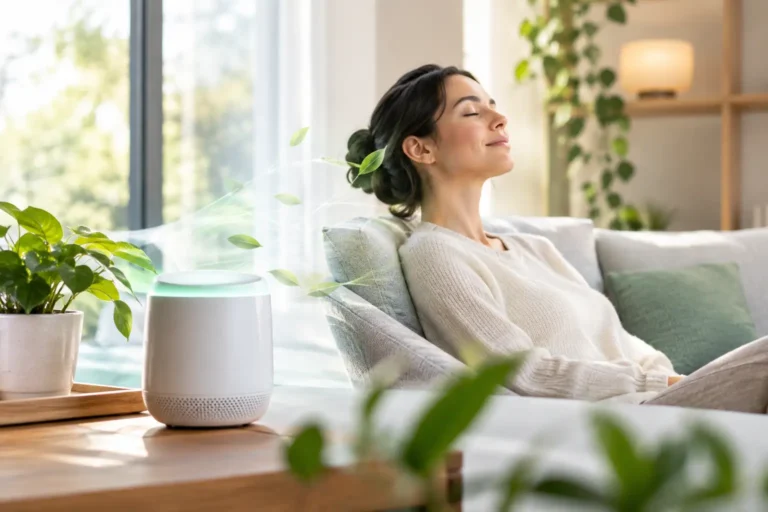

A forest does not feel restorative simply because it is quiet or visually beautiful. Trees release aromatic organic compounds into the air, and these compounds may help explain why time among conifers, cedars, and broadleaf canopies can leave people feeling calmer and more mentally refreshed. The top benefits of phytoncides center on stress regulation, respiratory comfort, mental clarity, and a more restorative daily environment.
Phytoncides are naturally occurring volatile compounds released by plants, particularly trees, as part of their own defense and communication systems. Alpha-pinene, beta-pinene, limonene, and other terpenes are among the compounds commonly associated with forest air. They are not a cure, a replacement for medical care, or a substitute for healthy habits. Yet growing interest in forest-bathing research suggests they may be a meaningful part of a broader preventive wellness routine.
For modern homes, hotel rooms, recovery spaces, and high-focus workplaces, that distinction matters. The goal is not to recreate wilderness theatrics indoors. It is to bring a more nature-aligned sensory environment into the places where people rest, recover, work, and sleep.
Top Benefits of Phytoncides in Everyday Spaces
A calmer stress response
The strongest practical appeal of phytoncides is their relationship with relaxation. Studies of forest exposure have associated time in wooded environments with lower perceived stress and changes in physiological markers linked to the stress response, including heart rate, blood pressure, and cortisol. Phytoncides may be one contributing factor alongside movement, daylight, quiet, and the visual experience of nature.
That nuance is essential. A forest walk is a complete experience, not a single-compound intervention. Still, the aromatic profile of forest-derived compounds can support a setting designed for decompression. In a hotel room after travel, a wellness suite between treatments, or a home recovery space at the end of a demanding day, the sensation of cleaner, forest-inspired air can become a reliable cue to slow down.
For guests and clients, the benefit is often felt as a shift in atmosphere before it is described in scientific language: less clinical, less overstimulating, and more conducive to rest.
Support for sleep quality and evening recovery
Poor sleep rarely has one cause. Stress, light exposure, temperature, noise, travel, alcohol, irregular schedules, and respiratory irritation can all affect the ability to settle at night. Phytoncides should not be presented as a sleep treatment, but a calmer environmental experience may help support the routines that make better sleep more likely.
A restorative evening setting reduces sensory friction. Forest-associated aromas can complement dimmer lighting, a cooler bedroom, consistent bedtime habits, and time away from demanding screens. When paired with red and near-infrared photobiomodulation as part of a carefully designed wellness routine, the experience can reinforce a clear transition from performance mode to recovery mode.
This is especially relevant for hospitality. Premium guests increasingly value more than a comfortable mattress. They notice whether a room helps them arrive, exhale, and wake up feeling more restored than they did the day before.
Sharper attention without a stimulatory feel
Many work environments rely on stimulation: brighter screens, more alerts, more caffeine, and more pressure. That may create short bursts of output, but it does not always support sustained concentration. Nature exposure, including forest settings, has been associated with attention restoration and improved mental fatigue in various research contexts.
Phytoncides may contribute to this experience by helping create a less stressful sensory baseline. The practical value is not that a forest-inspired environment will replace skill, sleep, or sound management. Rather, it can help create conditions in which focused work feels less effortful.
For offices, educational settings, and private study areas, this makes phytoncide-based wellness environments particularly compelling. They offer a more refined alternative to the idea that productivity must feel tense. Clearer thinking and calmer energy can coexist.
A more comfortable breathing experience
People often describe forest air as easier to breathe. Part of that perception comes from cooler temperatures, humidity, lower urban pollution, and the psychological effect of being outdoors. Phytoncides themselves are not a treatment for asthma, allergies, chronic respiratory illness, or infection. Anyone with persistent breathing symptoms should seek guidance from a qualified healthcare professional.
However, an indoor environment designed around nature-inspired air revitalization can feel more pleasant and supportive, particularly for people who are sensitive to stale, heavily scented, or enclosed spaces. The difference is experiential as much as technical: air should feel like part of recovery, not an invisible background condition.
This is where careful design matters. Concentration, individual sensitivity, and the quality of the delivery technology all influence the experience. More is not automatically better. A premium wellness environment should feel balanced, subtle, and comfortable rather than intensely fragranced.
Potential immune-system support
One of the most discussed findings in forest-bathing research concerns natural killer cells, an important part of the immune system’s early defense activity. Some small studies have observed changes in natural killer cell activity after forest visits, with effects that may persist for a period after exposure. Researchers continue to examine the role phytoncides play compared with other elements of time in nature.
This is promising, but it deserves responsible interpretation. Immune health is shaped by sleep, nutrition, physical activity, medical history, stress, age, and many other factors. No wellness technology should claim to prevent disease or replace clinical care.
The more credible perspective is that recovery-friendly environments can support the lifestyle conditions associated with healthy immune function. Reducing chronic stress and improving opportunities for quality rest are worthwhile objectives in their own right.
Why the Environment Matters More Than a Single Benefit
The real value of phytoncides is not limited to one outcome. It is their role within an integrated environment. A person entering a wellness room is not looking for a chemistry lesson. They are looking for a noticeable change in how the space feels and how they feel within it.
That is why isolated wellness features can underdeliver. A beautiful light system without an inviting atmosphere may feel incomplete. A calming aroma without thoughtful recovery tools may feel superficial. The most effective environments combine complementary elements: air that feels nature-inspired, lighting that supports regeneration, thoughtful acoustics, comfort, and a clear purpose for the space.
HealthWise approaches this principle by bringing Forest Air’s light-activated air revitalization together with Nircura’s red and near-infrared photobiomodulation systems. The intention is practical: create a compact wellness experience for modern settings where time is limited but recovery cannot be treated as optional.
Where Phytoncide-Inspired Wellness Fits Best
In hospitality, a forest-inspired recovery environment can distinguish a premium room, spa area, or private suite. For wellness and rehabilitation professionals, it can add an atmospheric layer that supports calm before or after a service. In offices, it can help create dedicated reset spaces for teams working under sustained cognitive demand.
At home, the most valuable use case is often the simplest: a quiet area for evening recovery, reading, breathing exercises, or restorative light sessions. Families do not need to turn every room into a spa. One intentionally designed space can be enough to make wellness more consistent.
The appropriate setup depends on the user. A hotel may prioritize guest experience and differentiation. A wellness center may focus on protocols and client comfort. A private user may value sleep routines, stress management, and convenience. The common thread is a desire for wellness that fits real life rather than adding another task to it.
A Grounded Way to Think About Phytoncides
Phytoncides are most valuable when they are treated with both curiosity and restraint. The research around forests and human well-being is compelling, but not every result applies equally to every person or indoor setting. Individual responses vary, and strong health claims should always give way to evidence, comfort, and professional judgment.
What is already clear is that people benefit from spaces that encourage the nervous system to settle. When nature-inspired air, restorative light, and intentional design work together, wellness becomes less of an occasional escape and more of a quality built into the places where life happens.
A better environment cannot solve every health challenge. It can, however, make the daily acts of resting, breathing, focusing, and recovering feel easier to return to – and that is where lasting well-being often begins.