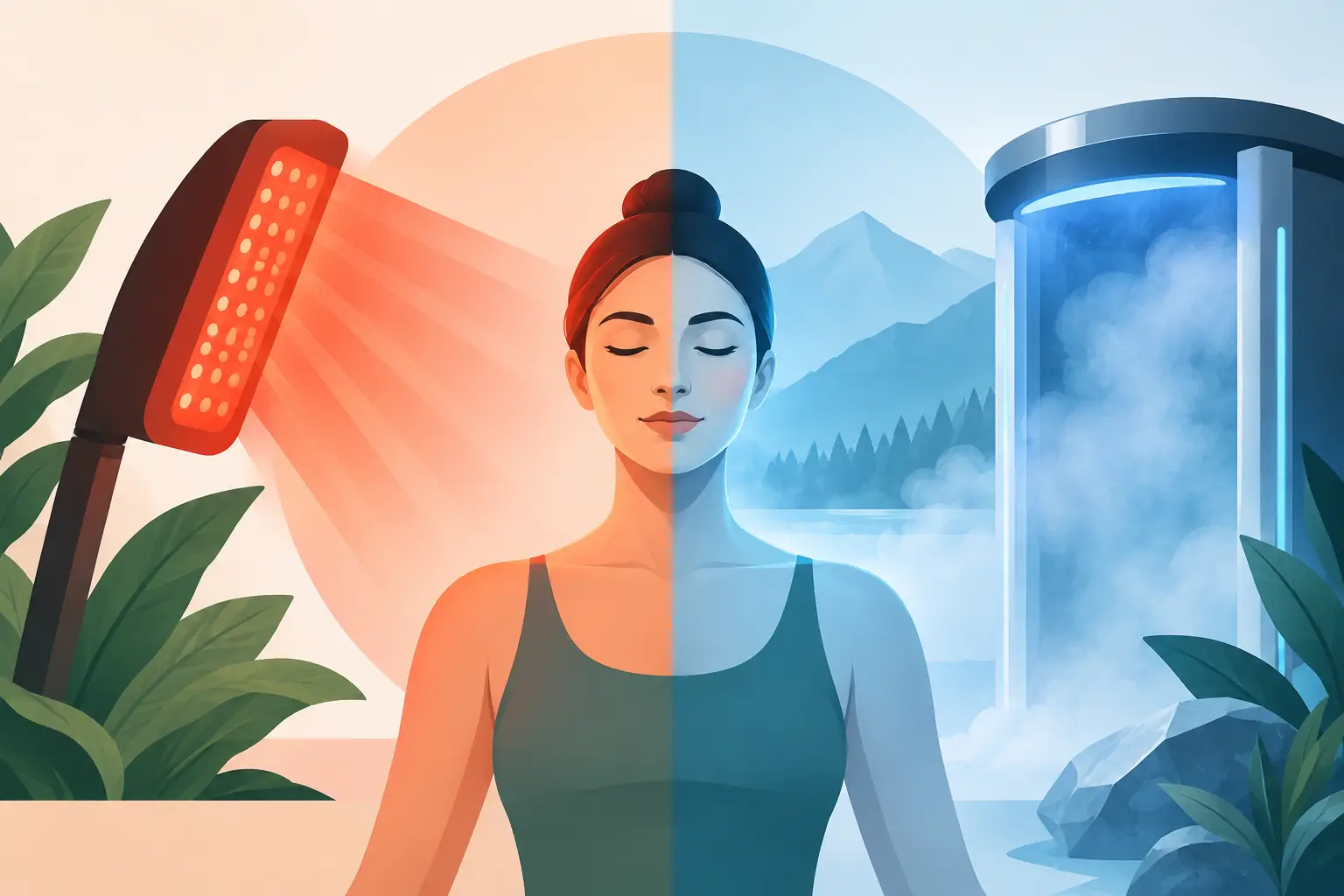
A cold chamber can deliver an immediate, unmistakable sensation. Red and near-infrared light works differently: quietly, without the shock of cold, as part of a considered recovery routine. Photobiomodulation versus cryotherapy is not simply a choice between two wellness trends. It is a decision about the kind of support your body, clients, or wellness environment needs at a particular moment.
For a hotel wellness suite, rehabilitation setting, high-performance workplace, or health-focused home, the best choice depends on the goal: short-term comfort after physical strain, a calmer ongoing regeneration practice, or an experience that makes recovery feel more accessible in daily life.
Photobiomodulation Versus Cryotherapy: The Core Difference
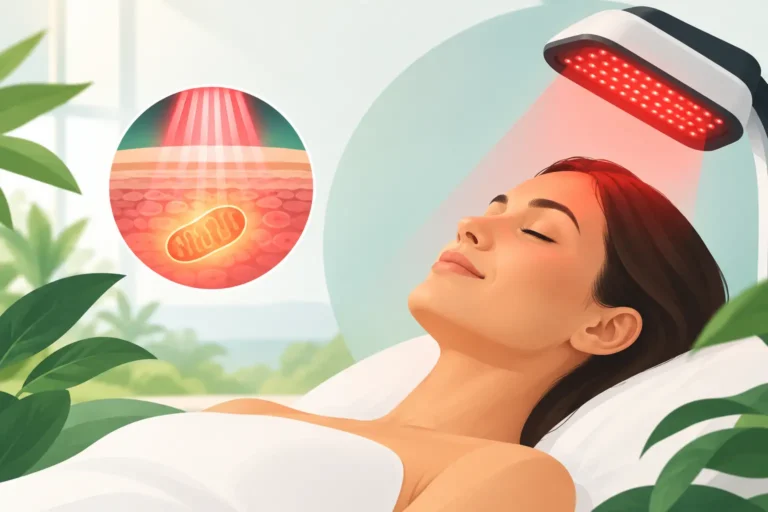
Photobiomodulation, often called PBM or red light therapy, uses specific wavelengths of red and near-infrared light. These wavelengths are designed to interact with biological tissue without heating it to damaging levels. In well-designed systems, the intention is to support cellular signaling and the body’s natural processes related to circulation, recovery, and tissue function.
The science is specific to the dose. Wavelength, irradiance, treatment duration, distance from the device, and the body area being treated all matter. More light is not automatically better. PBM follows a dose-response principle, meaning that too little may not create a meaningful effect, while too much may be less useful than a measured protocol.
Cryotherapy uses cold exposure. It can refer to localized cold packs, cold-water immersion, cold-air treatments, or whole-body cryotherapy chambers. Cold lowers skin and tissue temperature, temporarily constricts blood vessels, and slows nerve conduction. That is why it can feel effective when the immediate objective is to reduce soreness, numb discomfort, or create a rapid post-exertion reset.
In simple terms, cryotherapy creates a brief cold stress response. Photobiomodulation provides light-based support intended to fit more naturally into an ongoing wellness and regeneration routine.
When Cryotherapy May Be the Better Fit
Cryotherapy has a clear place in recovery culture, especially when someone wants an immediate sensation of relief after demanding activity. Athletes may use cold exposure after tournaments, intense travel, or unusually strenuous periods when short-term comfort and perceived muscle recovery are the priority.
Localized cold can also be familiar and practical for a recent minor bump or overworked area, provided it is used appropriately. The benefit is easy to understand: cold can temporarily reduce the sensation of pain and limit swelling in the early phase after an acute issue.
That said, the context matters. Regular cold-water immersion immediately after every strength-training session may not suit someone whose primary goal is muscle adaptation. Some research suggests that frequent, aggressive cold exposure directly after resistance exercise could interfere with aspects of training adaptation. This does not make cold exposure wrong. It means the timing should reflect the goal.
Whole-body cryotherapy also requires greater caution than its premium, high-energy image may suggest. It is not suitable for everyone, particularly people with certain cardiovascular conditions, cold sensitivity, Raynaud’s phenomenon, circulation concerns, or reduced skin sensation. Professional screening, trained supervision, and strict protocols are essential.
Where Photobiomodulation Can Add More Daily Value
PBM is often better suited to people who want a noninvasive recovery practice without the intensity of cold. A thoughtful red and near-infrared light session can be incorporated before work, after travel, following exercise, or during an evening wind-down routine. There is no need to brace against discomfort or schedule recovery around a dramatic temperature challenge.
For busy professionals, this practical quality matters. Recovery tools only create value when people use them consistently. A comfortable, time-efficient PBM session may be easier to maintain than an occasional, high-intensity cryotherapy experience.
In hospitality and professional wellness environments, PBM can also create a more versatile experience. It can support a premium recovery offering for guests after travel, a restorative option within a spa, or a quiet performance-focused amenity in a workplace. The experience is calm, modern, and easy to explain without overstating what the technology can do.
PBM is not a substitute for medical care, sleep, adequate nutrition, movement, or rehabilitation guidance. Evidence is promising across several applications, but outcomes vary by device quality, protocol, the person’s condition, and the consistency of use. It should be presented as a supportive wellness technology, not a cure-all.
Comfort, Commitment, and the Recovery Experience
The practical difference is often more revealing than the technical one. Cryotherapy is intense by design. Some people value the adrenaline, alertness, and sense of accomplishment that comes with cold exposure. Others find it unpleasant enough that they avoid returning.
Photobiomodulation is usually a more comfortable experience. Sessions can feel like intentional downtime: a few quiet minutes to rest, breathe, and give the body space to recover. This can make it particularly appealing for clients seeking stress reduction and a sustainable wellness ritual rather than a challenge.
For premium spaces, the environment should support the technology. Recovery is influenced not only by the device but also by whether a person can slow down, breathe comfortably, and step away from constant stimulation. HealthWise approaches this broader opportunity by combining advanced red and near-infrared photobiomodulation with nature-inspired, light-activated air revitalization. The aim is not to place isolated equipment in a room, but to create a coherent setting for calm and regeneration.
Can You Use Both?
Yes, but they should be used with a purpose rather than as a routine of more-is-better wellness. An athlete might choose cold after an exceptionally demanding event when immediate comfort is the priority, then use PBM on other days as part of a regular recovery plan. A spa may offer both modalities because different guests will have different preferences and needs.
The right sequence is less universal. If an individual is managing pain, inflammation, injury recovery, or a medical diagnosis, a qualified clinician should guide the approach. For healthy adults pursuing general wellness, it is often more useful to start with one clear objective and monitor how the body responds than to stack multiple interventions without a plan.
How to Choose for Your Space or Routine
Start with the experience you want to create. If the promise is fast, stimulating, short-term post-exercise relief, cryotherapy may be an appropriate addition. It is especially relevant where trained staff can screen users and manage safety carefully.
If the goal is a comfortable, repeatable recovery ritual that suits a broad range of adults, photobiomodulation may be the stronger foundation. It can work well in wellness studios, hotel environments, rehabilitation-oriented spaces, offices, and homes where ease of use and consistency matter.
Device standards deserve close attention. For PBM, ask about the wavelengths used, output, treatment coverage, session guidance, eye-safety instructions, and whether the provider can explain dose clearly. For cryotherapy, ask about operator training, screening procedures, temperature controls, emergency protocols, and contraindications. Premium wellness should feel elegant, but it should also be responsibly designed.
Safety Is Part of a Premium Wellness Standard
Red and near-infrared light is generally well tolerated when used according to device instructions, but direct exposure to high-intensity light should be treated with care, particularly around the eyes. Anyone taking photosensitizing medication, undergoing treatment for a health condition, or managing a persistent injury should speak with a qualified health professional before beginning a new protocol.
Cold exposure also deserves respect. Never use extreme cold to push through numbness, impaired circulation, or a suspected injury. Skin injury and adverse reactions can occur when cold is used incorrectly or for too long.
The more useful question is not which modality has the louder reputation. It is which one supports the recovery behavior you can maintain with confidence. For many people and wellness spaces, that means choosing a thoughtful, comfortable environment where regeneration becomes part of the day, not another extreme to endure.