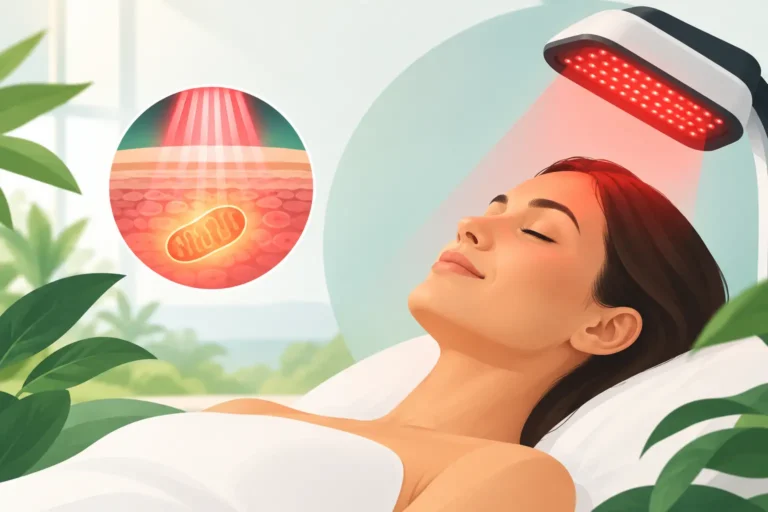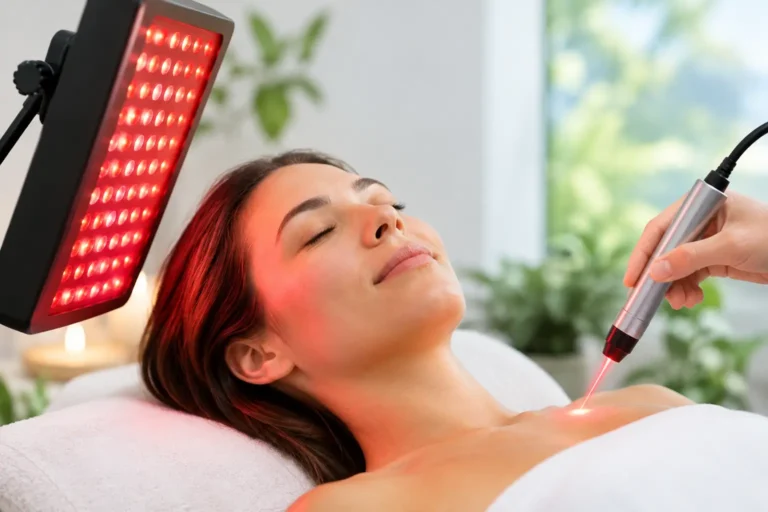
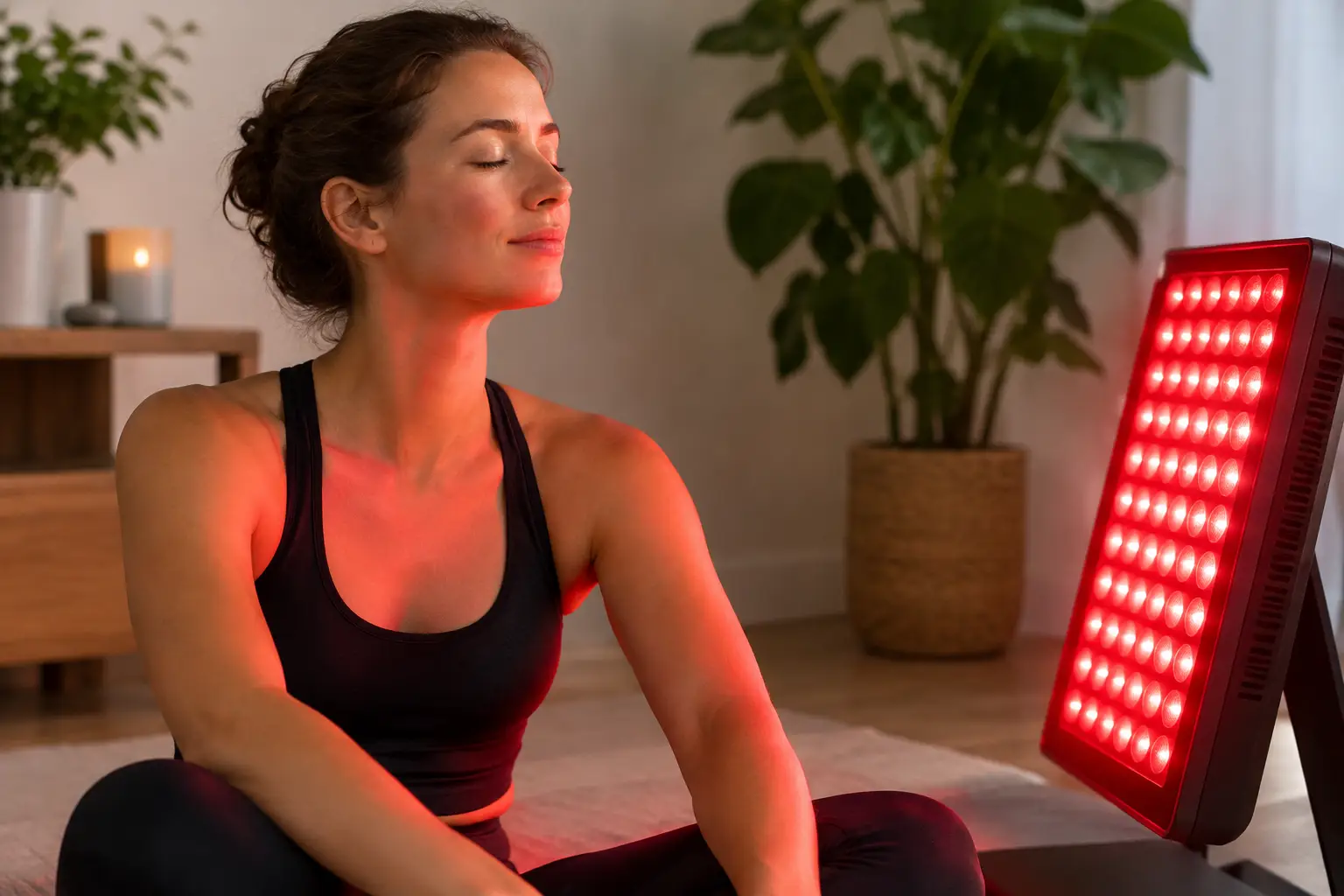
A red light session can look simple: stand or sit in front of a panel, turn it on, and wait. Yet red light dosing is what determines whether that time feels purposeful or becomes an inconsistent wellness habit. More exposure is not automatically better. The aim is to deliver an appropriate amount of red and near-infrared light to a defined area, at a frequency that suits the goal, the device, and the individual.
For homes, hotel wellness spaces, recovery settings, and professional environments, this distinction matters. A premium photobiomodulation system should support a calm, repeatable routine, not leave users guessing about distance, duration, and intensity.
What Red Light Dosing Actually Means
In photobiomodulation, dose describes the amount of light energy delivered to tissue. It is usually discussed as fluence, measured in joules per square centimeter (J/cm²). Fluence is calculated from irradiance, measured in milliwatts per square centimeter (mW/cm²), multiplied by treatment time.
The formula is straightforward:
Fluence (J/cm²) = irradiance (mW/cm²) × time (seconds) ÷ 1,000
If a device delivers 30 mW/cm² at the body and is used for 10 minutes, the estimated dose is 18 J/cm². That estimate is useful, but it is not the whole story. The irradiance that reaches the body changes with distance, beam angle, panel design, and how the manufacturer measured output.
This is why the number printed on a device is not enough. A meaningful protocol considers the delivered dose at the recommended treatment distance, not simply a peak output figure measured directly against the LEDs.
The Four Variables That Shape a Dose
Red light dosing is a relationship between several variables, not a single setting. The most relevant are:
- Wavelength: Red light, commonly in the mid-600 nm range, is often selected for more superficial targets such as skin. Near-infrared light, commonly in the 800 nm range, is invisible and generally reaches deeper than red light.
- Irradiance: This is the intensity of light at the treatment area. Higher irradiance shortens the time required to reach a given fluence, but does not necessarily create a better outcome.
- Time and distance: Moving farther from a panel usually lowers irradiance, so the session may need to be longer. Closer is not always more effective or more comfortable.
- Frequency: A plan of several sessions per week may be more valuable than occasional, very long sessions. The right schedule depends on the objective and the response of the person using it.
The practical lesson is simple: a 10-minute session can be modest, substantial, or poorly matched to the goal depending on the device and setup.
Why More Light Can Be Less Helpful
Photobiomodulation is often described through a biphasic dose response. At an insufficient dose, a biological response may be limited. At an appropriate dose, light may support cellular processes associated with recovery, circulation, and tissue function. Push well beyond that useful range, and the benefit may plateau or diminish.
That does not mean one extra minute will ruin a session. It means indiscriminate escalation is not a smart strategy. Users who chase the highest possible intensity or longest possible exposure can make their routine less precise, while adding heat and reducing comfort.
A measured approach is especially relevant in hospitality and professional wellness spaces. Guests and clients need a protocol that is clear enough to follow independently and conservative enough to be used with confidence.
How to Build a Practical Red Light Dosing Routine
Start with the device manufacturer’s protocol. Reputable systems provide recommended distance, session duration, and frequency because their output, optics, and thermal behavior are specific to that equipment. Borrowing a protocol from a different panel can create an inaccurate dose.
Then define one primary objective. Are you using light as part of a post-exercise recovery ritual, a skin-focused routine, an evening wind-down practice, or support around an area of temporary stiffness? The target influences how you position the device and which wavelengths may be most relevant.
For a general, whole-body wellness routine, consistency usually matters more than intensity. Begin with shorter sessions at the recommended distance, several times per week. Maintain that pattern long enough to evaluate comfort and adherence before changing the duration. If a device offers separate red and near-infrared controls, use its guidance rather than assuming both must always run at maximum output.
Keep a simple record for two to four weeks. Note session time, distance, frequency, target area, skin comfort, sleep quality, perceived recovery, or the outcome most relevant to your goal. This turns a vague routine into an informed one. It also helps wellness professionals create more personalized client experiences without making assumptions.
A Conservative Starting Framework
A sensible starting point is often 5 to 10 minutes per area at the manufacturer’s recommended distance, two to four times weekly. The appropriate duration may be shorter for a high-output system or longer for a lower-irradiance device used farther away.
Treat this as a framework, not a prescription. Published research uses different wavelengths, power densities, treatment areas, and schedules. A protocol designed for a targeted clinical application should not be copied directly into a whole-body consumer setting.
If comfort is good and results are not apparent after a consistent trial, adjust one variable at a time. You might slightly change the session length, frequency, or distance. Avoid changing all three at once. That makes it impossible to know what improved the experience.
Positioning Matters More Than Many People Expect
The dose is delivered where the light lands. If the goal is skin appearance on the face, the face should receive even exposure within the recommended distance. If the goal is recovery after training, position the panel toward the muscle groups you want to address rather than assuming a nearby panel treats the entire body equally.
Large-format systems can make whole-body sessions more practical, but coverage still depends on panel size, placement, and the user’s position. Rotating or treating front and back separately may be appropriate when even exposure is desired.
Bare skin is generally the simplest approach because thick or opaque fabrics can block light. Clean, dry skin also makes it easier to assess heat and sensitivity. Skincare products vary, so follow device guidance and avoid introducing a new active product immediately before a session if you are unsure how your skin will respond.
Safety Is Part of Good Dosing
Red and near-infrared photobiomodulation is noninvasive, but responsible use still requires attention. Follow the device instructions, especially for eye protection and treatment distance. Do not stare directly into bright LEDs, and use any included protective eyewear as directed.
People taking photosensitizing medications, managing a medical condition, or receiving treatment for an eye condition should speak with a qualified clinician before beginning a routine. The same applies to unexplained pain, a new skin change, pregnancy-related questions, or recovery after a procedure. Wellness technology can complement healthy routines, but it does not replace diagnosis or medical care.
Heat is another useful signal. Quality LED systems are designed to limit unnecessary thermal load, yet prolonged close-range sessions may still feel warm. If the skin becomes uncomfortably hot or irritated, stop the session and reassess the setup. A comfortable, repeatable experience is generally more valuable than a demanding one.
Designing Better Wellness Environments
The strongest red light routines fit naturally into real life. In a hotel suite, a short session can become part of an arrival, recovery, or evening ritual. In a workplace wellness area, it may support a focused reset between demanding periods. In a spa or rehabilitation setting, it can be offered within a structured recovery experience under appropriate professional guidance.
This is the thinking behind integrated wellness environments. At HealthWise, advanced red and near-infrared photobiomodulation is considered alongside the quality of the surrounding space, helping create a setting that feels restorative rather than technical or intimidating.
The most effective dose is rarely the highest possible number. It is the dose you can understand, repeat comfortably, and refine with intention as part of a broader rhythm of sleep, movement, recovery, and well-being.