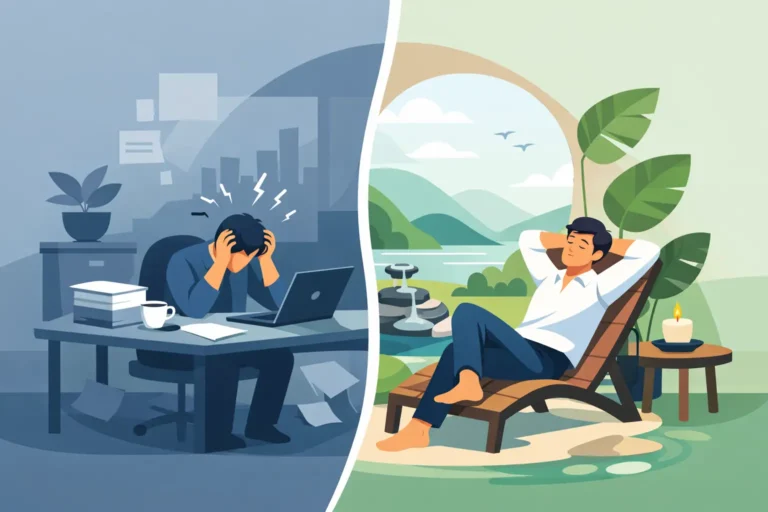
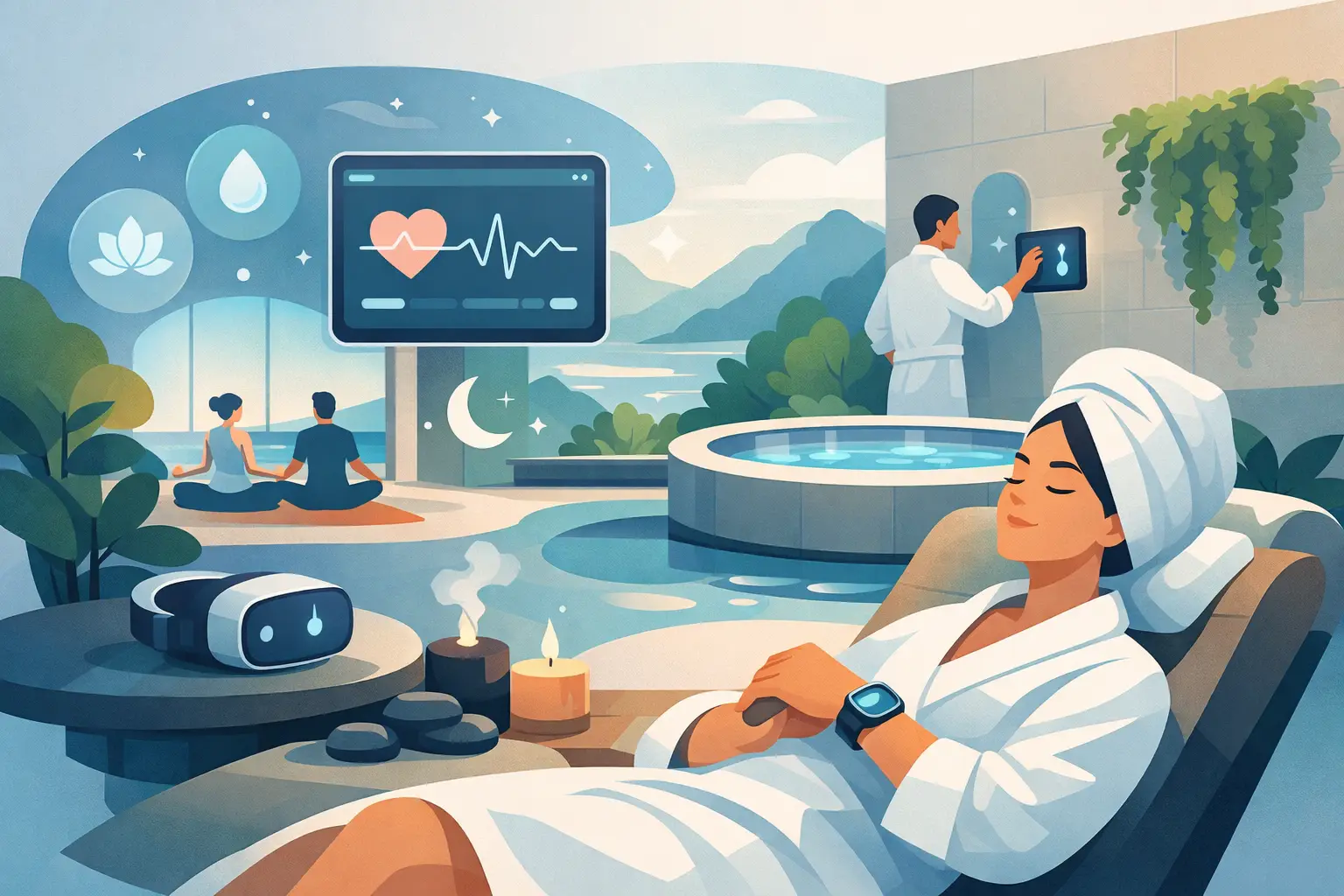
A guest may not remember the thread count of the sheets, but they will remember how their body felt when they woke up. That is the real opportunity behind a guide to hotel wellness technology: moving beyond amenities that look impressive in photographs and creating rooms that actively support rest, recovery, and mental clarity.
For hotels, wellness technology is no longer limited to a spa floor or a premium suite. Guests arrive after long flights, demanding meetings, disrupted sleep, and constant screen exposure. A thoughtfully designed wellness environment can turn the room itself into a restorative space – without adding complexity to the guest experience.
Why Hotel Wellness Technology Has Become a Guest Expectation
Wellness-minded travelers are becoming more discerning. They do not simply want a branded lotion, a yoga mat in the closet, or a short spa treatment before dinner. They increasingly value environments that help them reset: better conditions for sleep, a calmer atmosphere, and practical tools for recovery during a short stay.
This shift matters commercially. A hotel room can be beautiful and still feel generic. A wellness-enhanced room, by contrast, gives guests a tangible reason to choose one property over another, upgrade their booking, extend a stay, or return. The strongest concepts make the benefit feel natural rather than technical. Guests should not need an instruction manual to feel more restored.
There is also a clear operational advantage. A room-based wellness offer can extend the value of a hotel’s wellbeing proposition beyond spa operating hours and beyond the number of available treatment rooms. It creates a private, on-demand experience for business travelers, couples, recovery-focused guests, and those who simply want a better night’s rest.
A Guide to Hotel Wellness Technology: Start With the Guest Journey
The right technology is not chosen by asking, “What is new?” It is chosen by asking, “What does this guest need at each point of their stay?”
A business traveler may need to transition from a high-pressure workday into quality sleep. An international guest may need support after a long journey and schedule disruption. A wellness traveler may want a more intentional recovery ritual without sacrificing privacy. These are different use cases, but they share the same need: a room that helps the nervous system slow down and the body recover.
Start by mapping the guest journey from check-in to departure. Consider the arrival moment, the period before bed, the first hour after waking, and the time between meetings or activities. Technology should support these moments, not compete for attention.
For example, wellness lighting can be used to create a calmer evening setting, while red and near-infrared photobiomodulation can offer a non-invasive recovery element for guests who want to incorporate it into their routine. Nature-inspired air revitalization can help shape the sensory quality of the room and reinforce the feeling of a fresher, more restorative environment.
The experience works best when it feels integrated. A glowing device placed randomly next to a minibar is not a wellness concept. A considered recovery zone with clear placement, intuitive controls, and a simple explanation of benefits is.
The Core Technologies Worth Evaluating
Hotel wellness technology should have a defined purpose. It should either improve the quality of the environment, support the guest’s recovery routine, or make restorative choices easier during travel. In many cases, the most valuable rooms combine complementary approaches rather than relying on a single feature.
Light-Activated Air Revitalization
The air and atmosphere of a room affect the guest experience immediately, even when the guest cannot explain why. Nature-inspired, light-activated air revitalization is designed to bring a sense of freshness and comfort into indoor environments. In a hotel context, it can be especially relevant for rooms where travelers spend long periods resting, working, or recovering from travel fatigue.
The value is not merely technical. It is emotional and practical. A room that feels lighter, calmer, and more pleasant supports the hotel’s wider promise of care. For properties focused on wellness, sleep, rehabilitation, or premium business travel, environmental quality should be treated as part of the guest offering rather than as an invisible building function.
Red and Near-Infrared Photobiomodulation
Red and near-infrared photobiomodulation uses specific wavelengths of light in a non-invasive way to support natural cellular processes. Guests may choose it as part of a personal routine focused on relaxation, recovery after activity, skin vitality, or preparation for rest.
For a hotel, its appeal is immediate: it offers a high-value wellness ritual that can take place privately in the room. It is particularly suited to suites, wellness floors, sports and resort hotels, medical wellness settings, and properties serving executives who value efficient recovery.
However, the technology must be presented responsibly. Avoid promising medical outcomes or treating it as a substitute for professional medical care. The strongest guest communication is clear and measured: explain what the session is designed to support, show how to use the system comfortably, and let guests choose whether it fits their wellbeing routine.
Intelligent, Low-Friction Controls
Even excellent technology can fail if it is difficult to use. Guests should be able to begin a session in seconds. Simple presets such as “Arrive,” “Recover,” “Unwind,” and “Morning Reset” are often more useful than a screen full of technical settings.
Hotels should also consider how controls fit their service model. A luxury property may offer a short in-room orientation at check-in. A business hotel may prioritize self-guided use with a concise card or digital room guide. The best approach depends on guest profile, staffing, and the sophistication of the installed system.
Design the Room as a Recovery Space
Technology alone does not create wellness. Placement, materials, lighting, sound, and visual calm all influence whether a guest uses the offering. The room should communicate restoration before the guest reads a single instruction.
Create a dedicated wellness zone where possible. This may be a comfortable chair near a photobiomodulation system, a small area for stretching, or a quiet corner designed for breathing and decompression. The goal is not to turn every room into a clinical treatment space. It is to offer a refined ritual that belongs naturally within the room’s design.
A hotel should also protect the guest’s sense of choice. Some travelers want a fully guided experience; others want to enter the room, close the door, and recover in private. Technology should accommodate both preferences. Discreet design, low noise, and intuitive operation matter as much as the device specifications.
Make the Business Case Before Scaling
A wellness room concept needs a viable path from pilot to portfolio. Begin with a defined category of rooms rather than attempting a property-wide rollout immediately. Premium rooms, long-stay accommodations, executive floors, resort villas, and recovery-oriented packages are logical starting points because the guest value is easier to articulate.
Track more than room revenue. Monitor upgrade interest, guest feedback, repeat stays, wellness package uptake, length of stay, and comments about sleep, comfort, and recovery. Qualitative feedback is valuable in the early stages because it shows which part of the experience guests actually notice.
The financial model depends on the property. Some hotels may position wellness technology as a premium-room differentiator. Others may build it into spa memberships, corporate retreat offers, sports recovery packages, or rehabilitation partnerships. It depends on brand positioning and guest demand. What should remain constant is the promise: meaningful wellbeing, delivered in a way that is elegant, practical, and credible.
Maintenance and staff readiness deserve equal attention. Choose systems that are appropriate for hospitality use, straightforward to maintain, and supported by clear training. Front desk teams should know how to introduce the experience in one confident sentence. Housekeeping teams should understand placement and basic handling. Spa or wellness staff should be able to answer deeper questions without overclaiming benefits.
A More Distinctive Hotel Wellness Offer
Standalone wellness devices can be useful, but a coherent environment is more memorable. HealthWise brings together Forest Air’s nature-inspired air revitalization and Nircura’s red and near-infrared photobiomodulation systems to help hotels create private wellness spaces centered on breathing, regeneration, and everyday recovery.
This integrated approach is especially relevant for hotels that want to make wellness part of the stay itself, not an optional activity guests may never book. It allows the room to become a calm, considered extension of the property’s service philosophy.
The most successful hotel wellness technology does not ask guests to do more. It gives them a better setting in which to pause, breathe, and recover – exactly when travel makes those moments most valuable.