
A demanding workday often leaves a visible trace: shallow breathing, tense shoulders, a mind that keeps replaying unfinished tasks. This is why the question, does forest air reduce stress, resonates far beyond outdoor enthusiasts. People want practical ways to recreate the restorative feeling of time in nature, whether they are at home, in a hotel room, or between meetings.
The short answer is that time in forest environments can support stress recovery, but it is not a single ingredient in the air that does all the work. The calming effect comes from a combination of cleaner-feeling surroundings, natural light, vegetation, quieter soundscapes, slower breathing, and the permission to pause. Understanding that distinction helps create wellness spaces that feel credible, useful, and genuinely restorative.
Does Forest Air Reduce Stress in Real Life?
Research into forest bathing and nature exposure has repeatedly associated time among trees with lower perceived stress, improved mood, and a calmer physiological state. In practical terms, many people notice that their breathing slows, mental noise softens, and physical tension begins to release after even a short period outdoors.
Still, forest air should not be treated as a cure-all. Stress has many sources: workload, sleep debt, caregiving, health concerns, financial pressure, and constant digital stimulation. A walk in the woods may help the nervous system reset, but it cannot replace medical care, mental health support, healthy sleep, or necessary changes to a stressful routine.
What nature can offer is an effective recovery context. A forest gives the brain fewer demands to process than a busy street, office, or screen-filled room. Gentle visual patterns, daylight, natural fragrance, and the sound of leaves can invite attention to settle rather than remain on alert. That shift is valuable for individuals and highly relevant for hospitality, wellness, and workplace environments designed around well-being.
Why Forest Settings Feel Calming
The most compelling explanation is not that one factor works in isolation. It is the layered experience of being in a natural setting.
Your nervous system receives fewer alarms
Urban environments often require constant filtering. Traffic, notifications, conversations, artificial lighting, and time pressure compete for attention. Forest environments tend to offer softer, more predictable sensory input. The brain can move away from continuous vigilance and toward a state better suited to rest and recovery.
Breathing becomes more intentional
When people enter a quiet natural space, they often breathe more slowly and deeply without being instructed to do so. That matters because breathing patterns influence how the body experiences pressure. A few minutes of unhurried breathing can become a simple signal that the immediate demand has passed.
Natural light supports daily rhythm
Daylight is part of the body’s timing system. Exposure to appropriate light during the day can support alertness, while a calmer evening environment can make it easier to transition toward rest. For guests, employees, and families, this connection between light and daily rhythm is often overlooked until sleep quality begins to suffer.
Nature gives attention somewhere gentler to land
Looking at greenery, branches, clouds, or water is different from scanning emails or analyzing data. Natural scenes can hold attention without demanding a decision. This is one reason even a view of trees, a planted courtyard, or a deliberately nature-inspired wellness room can feel more restorative than a purely functional interior.
Forest Air Is Not the Same as a Forest
This distinction matters, especially when bringing nature-inspired wellness into indoor spaces. An indoor system cannot reproduce the full ecology of a forest: the scale, movement, terrain, living biodiversity, and freedom from daily obligations. It should not promise to do so.
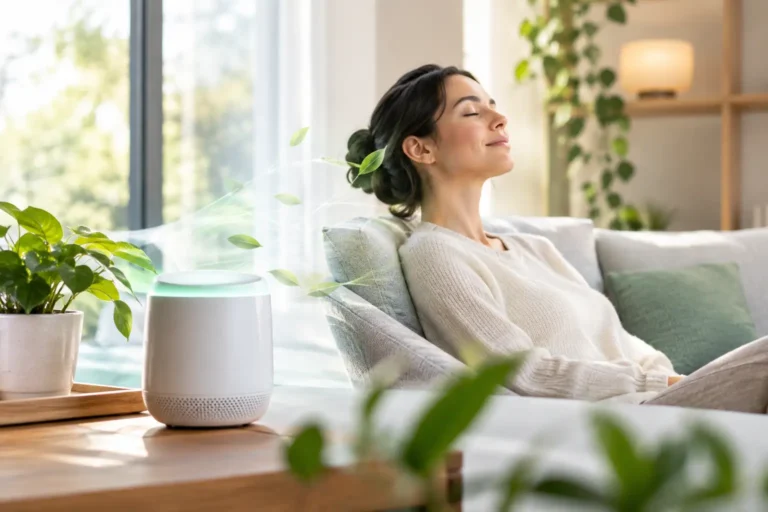
However, indoor wellness environments can borrow meaningful principles from nature. They can prioritize a more comfortable breathing experience, considered lighting, quiet, restorative routines, and materials or visual elements that reduce sensory overload. The goal is not to imitate the outdoors perfectly. It is to make recovery more available when a forest visit is not realistic.
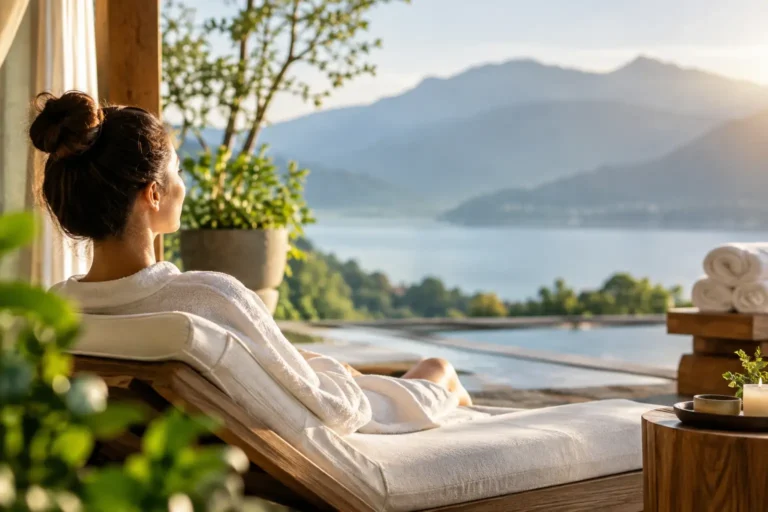
For a business traveler arriving late at a hotel, a calm room environment can make the difference between continuing to work in a state of tension and entering a more deliberate wind-down routine. In an office, a restorative space may support focus after high-concentration work. At home, it can create a reliable boundary between the day’s demands and the evening’s recovery.
Designing a Space That Supports Stress Recovery
A premium wellness space works best when its elements reinforce one another. Air, light, comfort, and behavior should form a coherent experience rather than compete for attention.
Start with the purpose of the room. Is it designed for a midday reset, post-travel recovery, quiet reading, restorative sleep preparation, or a wellness treatment? The answer determines the right intensity of light, the level of privacy, and how long someone is likely to stay there.
Then consider the sensory load. A recovery-oriented space does not need to be dark, silent, or overly styled. It needs to feel organized and intentional. Reduce unnecessary visual clutter. Create comfortable seating or a place to recline. Limit harsh reflections and avoid making the room another source of notifications, work materials, or decision-making.
Light deserves special attention. Red and near-infrared photobiomodulation is increasingly used in wellness settings as a non-invasive supportive modality for recovery-focused routines. While individual experiences vary, it can fit naturally into a quiet protocol that encourages people to pause, sit comfortably, and take time away from stimulation. It is most effective as part of a broader recovery practice, not as a substitute for sleep, movement, or professional medical guidance.
This integrated approach is central to the HealthWise concept: nature-inspired, light-activated air revitalization combined with red and near-infrared photobiomodulation in a setting made for practical everyday recovery. The value is not simply in placing advanced technology in a room. It is in giving people a clear, repeatable moment to breathe, reset, and regenerate.
A Practical 15-Minute Forest-Inspired Reset
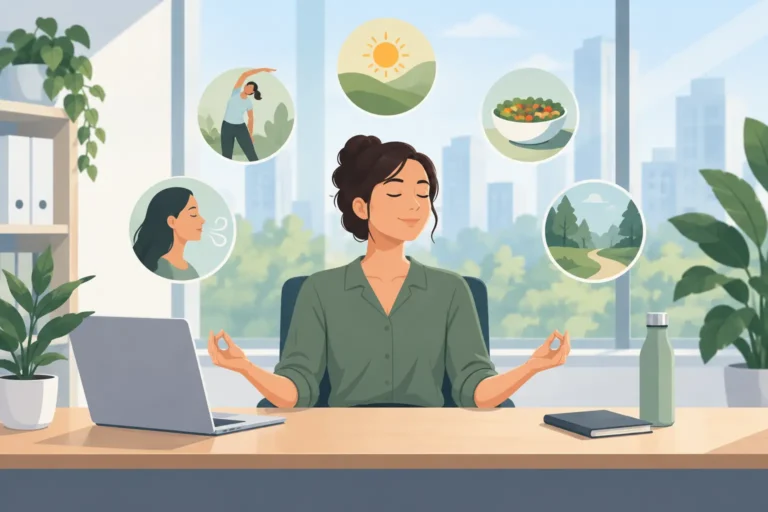
Stress support becomes more useful when it can happen on an ordinary Tuesday, not only during a weekend retreat. A short reset can be enough to interrupt the cycle of rushing from one demand into the next.
Begin by stepping away from screens and sitting in a comfortable position. Keep the room softly lit, or use an appropriate recovery-light routine if one is available. Spend the first few minutes noticing your breath without trying to force it. Let the exhale become slightly longer than the inhale.
For the next several minutes, direct attention to one calming sensory cue: a view outside, a natural texture, a quiet sound, or the simple sensation of the air as you breathe. The point is not perfect meditation. It is to reduce input and give the mind one uncomplicated place to rest.
Before returning to work or daily tasks, decide on the next single action. This small transition prevents the reset from becoming another item to check off. In a hotel or spa setting, staff can make this process intuitive by designing the room and guest guidance around ease rather than instruction overload.
When Nature-Inspired Wellness Has the Greatest Value
These environments can be particularly useful for people whose days are fragmented by travel, meetings, caregiving, or prolonged screen work. They may also serve wellness professionals and rehabilitation centers looking to add a calm, non-invasive layer to existing recovery services.
The trade-off is that environmental wellness requires consistency. A beautifully designed recovery room will have limited impact if users only enter it while answering emails, rushing through a session, or expecting immediate transformation. Its strength lies in repeated, intentional use.
A forest may remain the fullest expression of nature’s restorative potential. Yet a thoughtfully designed indoor environment can bring part of that experience closer to everyday life – one slower breath, one quieter room, and one protected moment of recovery at a time.