A wellness room earns its place when it changes the quality of a working day, not when it becomes an attractive but unused corner of the office. This office wellness room implementation example shows how a compact, thoughtfully designed space can support recovery between meetings, calmer breathing, and a more focused return to work.
For office managers, hospitality operators, and wellness professionals, the opportunity is clear: employees increasingly expect environments that recognize the physical and mental load of modern work. The challenge is creating a credible solution that feels refined, simple to use, and appropriate for a professional setting.
Office wellness room implementation example: a 180-square-foot recovery space
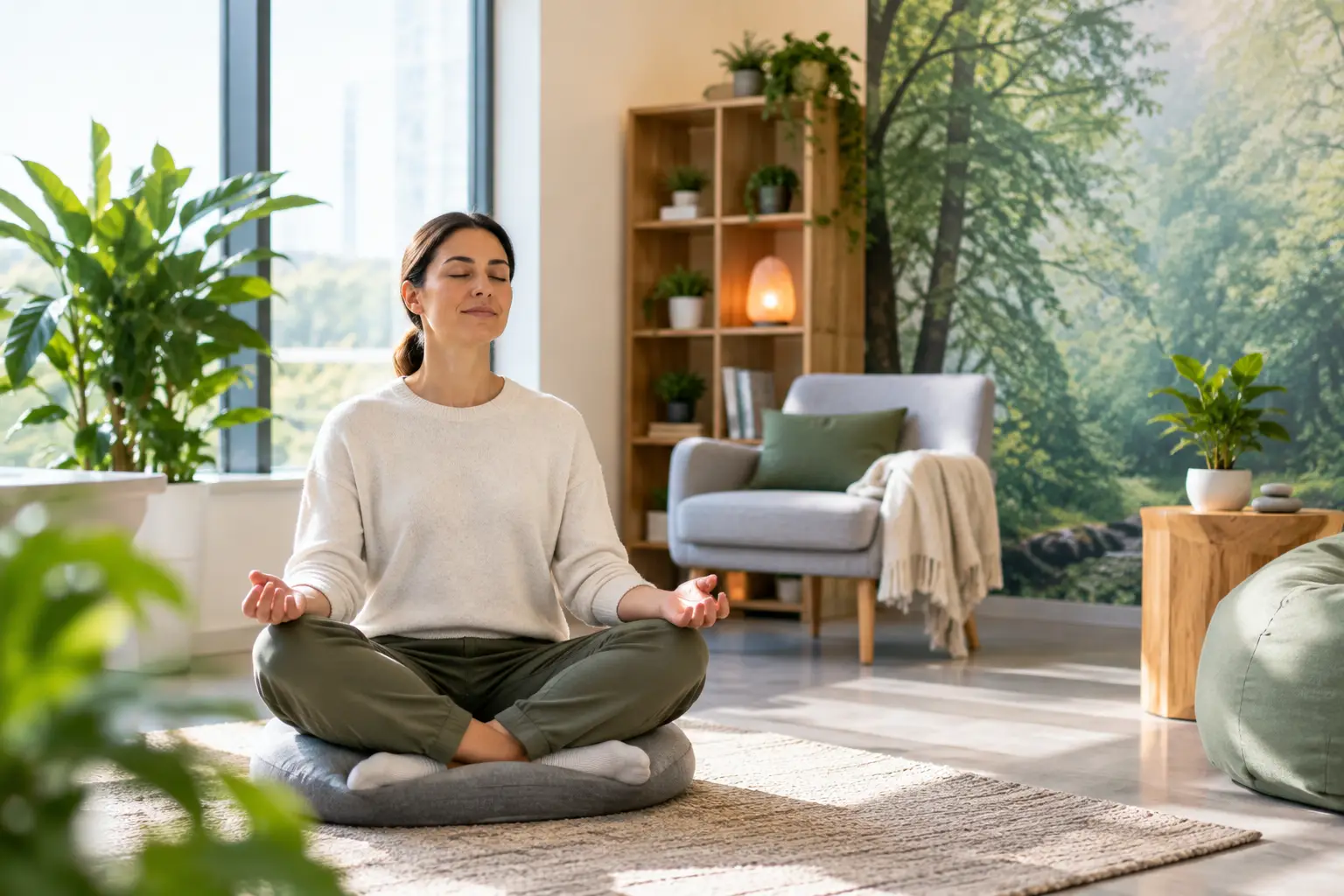
Imagine a 180-square-foot room located near the main work area, but away from phone booths, meeting rooms, and high-traffic corridors. It accommodates one person privately or two colleagues during a quiet, scheduled session. The purpose is not entertainment or passive lounging. It is a short, intentional reset.
The room uses a soft, nature-led visual language: warm wood textures, acoustic wall finishes, muted mineral colors, and indirect lighting. A comfortable reclining chair is positioned as the focal point, with enough clear space around it for accessibility, cleaning, and easy equipment servicing. Storage remains concealed so the room retains a calm, uncluttered presence.
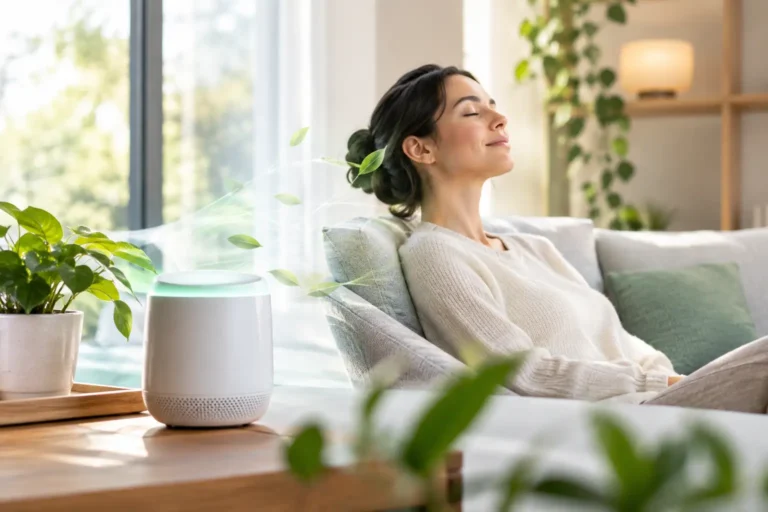
At the center of the experience are two complementary elements: nature-inspired, light-activated air revitalization and red and near-infrared photobiomodulation. Together, they create an environment designed around the quality of the space itself and the restorative ritual taking place within it.
The employee enters, closes the door, and chooses a 10-, 15-, or 20-minute session. A simple wall display explains the available settings in plain language. There is no complex onboarding sequence and no pressure to understand the technology in detail before using it. The design does the work: sit comfortably, slow down, breathe, and allow the session to become a defined pause in the day.
Start with the business need, not the equipment
The best wellness rooms are built around a specific workplace problem. In one office, the priority may be recovery for teams working long shifts or frequent video calls. In another, it may be attracting talent, strengthening a premium employer brand, or adding a meaningful wellbeing amenity to a flexible workplace.
Before planning the room, leadership should define what success looks like. Is the goal to provide a quiet recovery setting? To support focused breaks during demanding project cycles? To improve the quality of an executive lounge or a corporate wellness program? A clear answer influences location, capacity, scheduling, and investment level.
This is also where realism matters. A wellness room should complement, not replace, healthy workload management, ergonomic workstations, access to daylight, movement, and appropriate medical care. It is a practical part of a broader wellbeing culture, not a shortcut around organizational issues such as chronic overwork.
Choose a location that protects the experience
A room beside a noisy kitchen or a busy printer area will struggle, however beautiful the interior may be. Select a space with low ambient noise, stable ventilation, and enough privacy for people to use it without feeling observed.
If a dedicated room is not available, a private section within a larger wellness suite can work well. The trade-off is that shared spaces need stronger acoustic separation and a more disciplined booking system. For smaller offices, a single-chair recovery room may deliver more value than a larger multipurpose lounge that lacks privacy.
Design for short, repeatable sessions
Most professionals will not take an hour away from their responsibilities in the middle of the day. The room should be designed for sessions that fit naturally before work, during a lunch break, after travel, or between demanding meetings.
A 15-minute format is often a strong starting point. It feels achievable, allows several people to use the room each day, and creates a consistent habit. Longer sessions can be reserved for quieter periods or for hospitality and spa environments where guests expect a more immersive wellness experience.
Creating an environment people trust
Premium wellness depends on sensory coherence. A high-quality recovery chair paired with harsh ceiling lights and confusing instructions creates mixed signals. The room should communicate calm before a user begins a session.
Lighting deserves special attention. General illumination should be warm, dimmable, and glare-free, while red and near-infrared photobiomodulation is delivered through equipment designed specifically for that purpose. Photobiomodulation uses targeted wavelengths of light and is widely used in wellness and recovery contexts. However, it should be communicated responsibly: it is a non-invasive wellness modality, and claims should remain aligned with the equipment’s intended use and applicable local guidance.
Forest Air’s nature-inspired, light-activated air revitalization can add another important dimension. People often recognize the impact of an environment before they can articulate it. A room that feels fresh, quiet, and cared for makes it easier to pause, breathe more intentionally, and settle into a recovery ritual.
The physical details matter as much as the technology. Use easy-to-clean finishes, comfortable textiles suitable for commercial use, a small surface for personal items, and clear visual cues for cleanliness. Avoid strong fragrances, which can be distracting or unsuitable for people with sensitivities. Nature can be suggested through materials, imagery, and gentle sound, without turning the room into a themed escape.
Operational details determine adoption
Even an exceptional room can fail if employees do not know when or how to use it. Adoption begins with a simple launch: explain the room’s purpose, who it is for, how to book it, and what a typical session feels like. Keep the invitation practical rather than overly promotional.
A digital booking system prevents awkward interruptions and provides useful utilization data. In a smaller workplace, a shared calendar may be sufficient. In a hotel, spa, or rehabilitation setting, staff-led booking allows the experience to be integrated into guest and client journeys.
Set clear standards for room turnover. Between users, staff should inspect seating surfaces, reset towels or disposable headrest covers if used, and confirm that the room is orderly. Daily checks should cover the equipment, ambient lighting, room temperature, and user instructions. These routines protect the premium feel that makes people want to return.
Train the people who introduce the room
Reception teams, office coordinators, HR leaders, and wellness staff should understand the room well enough to describe it accurately. They do not need to make clinical promises. They do need to explain the session flow, basic comfort considerations, and any manufacturer guidance regarding use.
This is especially relevant for photobiomodulation equipment. Users should be encouraged to follow provided instructions and consult an appropriate healthcare professional if they have a medical condition, are pregnant, use photosensitizing medication, or have questions about whether a light-based wellness session is suitable for them.
HealthWise approaches this type of space as an integrated environment rather than a collection of standalone devices. That perspective is valuable because it keeps the focus on the complete experience: air, light, comfort, privacy, aesthetics, and a realistic routine for the people using it.
Measure what matters without making the room feel clinical
Utilization is the first metric. Track booking frequency, repeat visits, peak times, and whether certain teams are underusing the room. If appointments are consistently missed, the issue may be location, scheduling friction, or a lack of internal awareness rather than the room itself.
Short, voluntary feedback can reveal more. Ask users whether the space felt easy to use, calming, private, and worthwhile. For employers, it can also be useful to monitor broader engagement indicators over time, such as employee satisfaction with workplace amenities or perceptions of support during high-pressure periods.
Do not force health claims into an internal dashboard. A wellness room is not a diagnostic tool, and its value is not limited to a single number. Its real contribution may be that a team member returns to a difficult conversation more composed, a frequent traveler has a restorative pause before a presentation, or an employee feels their workplace has made room for recovery.
Scale the concept to fit the setting
The same model can be adjusted for different environments. A corporate office may prioritize high turnover and efficient 15-minute sessions. A luxury hotel may create a more immersive in-room or private-suite ritual for guests arriving after long travel. A spa or rehabilitation center may use the space as a premium addition to an existing wellness program, with trained professionals guiding the experience.
Budget should follow the intended use. A compact room with one high-quality session station can be more effective than a large space filled with disconnected features. Start with the experience people will actually use, then expand after demand is demonstrated.
The strongest wellness rooms do not ask people to escape their lives for hours. They give them a credible place to recover within real life. When the environment is calm, the technology is purposeful, and the experience is easy to repeat, a small room can become one of the most valued spaces in the building.