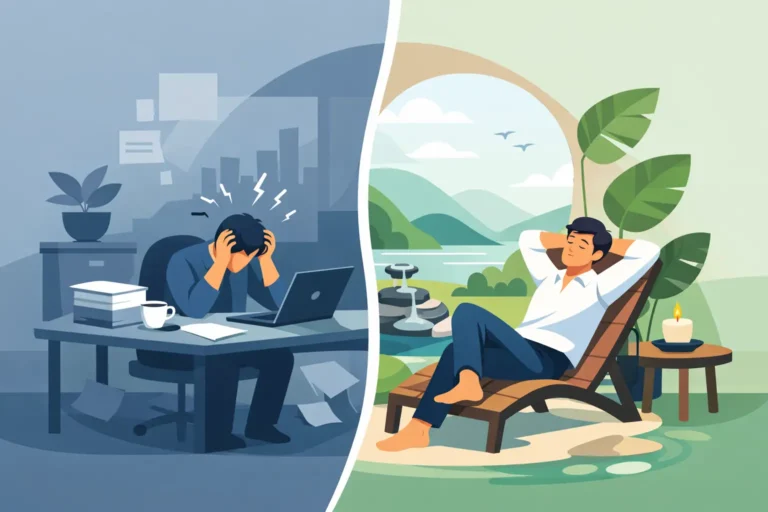

A guest who arrives after a delayed flight, a full day of meetings, or a long drive does not need another decorative pillow. They need a room that helps their nervous system slow down. The best hotel wellness room ideas turn an ordinary overnight stay into a credible recovery experience – one guests can feel within the first few minutes and remember when choosing where to book next.
For hotels, this is not about filling rooms with wellness gadgets. It is about designing a quiet, intuitive environment where air, light, comfort, and restorative rituals work together. The strongest concepts feel refined rather than clinical, and practical rather than performative.
1. Design a Clear Arrival Ritual
The wellness experience should begin at the door. A calm arrival sequence signals that this room has a different purpose from a standard guest room. Consider a soft entry light, a simple welcome message with a suggested evening wind-down routine, and an uncluttered surface where guests can set down a phone, key card, and bag.
This small moment matters because travel creates mental friction. Guests are often moving quickly, making decisions, checking messages, and adjusting to a new environment. A room that immediately reduces visual noise and gives them one simple next step creates a more intentional stay.
A premium approach does not require excessive branding. The room should communicate wellness through materials, lighting, comfort, and function first. A discreet guide can explain the available features in clear language, including how to prepare the space for rest or use a recovery-focused amenity.
2. Make Lighting Support the Guest’s Natural Rhythm
Lighting is one of the most powerful wellness tools a hotel can control. Bright, cool light may help a room feel energized during daytime hours, while warmer, lower-intensity lighting is better suited to evening rest. Guests should be able to change the mood without needing to understand a complicated control panel.
Offer a few clearly labeled settings such as Arrival, Focus, Relax, and Sleep. Place reading lights where they are genuinely useful, and make sure bedside controls are easy to reach in the dark. Blackout shades remain essential, particularly in urban hotels, airport properties, and rooms facing public spaces.
For a more advanced wellness category, hotels can integrate red and near-infrared photobiomodulation systems as an optional private recovery ritual. These systems should be presented carefully and professionally, with clear instructions, appropriate use guidance, and no exaggerated promises. For guests who prioritize regeneration after exercise, business travel, or long journeys, this can become a meaningful point of distinction.
3. Treat the Room’s Air as Part of the Experience
Guests notice stale, dry, or heavy-feeling rooms immediately, even if they cannot explain why. A wellness room should feel fresh from the moment the door opens. This calls for thoughtful ventilation, diligent housekeeping practices, low-odor materials, and a design strategy that avoids trapping scents and humidity.
Hotels seeking a more differentiated offering can explore nature-inspired, light-activated air revitalization as part of the room environment. The purpose is not to make the room feel technological. It is to create a more pleasant, restorative atmosphere that complements sleep, breathing comfort, and time spent indoors.
Forest references can work beautifully here, but restraint is key. Natural textures, subtle botanical imagery, and warm wood tones can support the sensory message without turning the room into a theme. The guest should feel a sense of ease, not like they have entered a staged spa set.
4. Create a Dedicated Recovery Zone
A hotel room becomes more valuable when it gives guests permission to pause. Even in a compact footprint, a recovery zone can be created with one comfortable chair, a small side table, a soft throw, and a light source that does not resemble a workstation.
The distinction is important. Many guests work from their rooms, but a wellness room should not force them to relax in the same place where they answer emails. If space allows, separate the desk from the recovery area. If it does not, use lighting and furniture placement to create two distinct modes within one room.
Add a printed or digital suggestion for a 10-minute reset: sit comfortably, dim the lights, set the phone aside, drink water, and breathe slowly. It is simple, but it turns the room’s design into an actionable benefit rather than a visual claim.
5. Upgrade Sleep Beyond Premium Bedding
High-quality bedding is expected in an upscale hotel. Wellness-oriented sleep design goes further by addressing the conditions around the bed. The room should be quiet, cool, dark, and easy to personalize.
Give guests control over temperature whenever possible. Provide a choice of pillow profiles rather than assuming one density suits everyone. Use soft-close cabinetry, reduce appliance noise, and position charging access so guests do not need to sleep beside a bright screen or a tangle of cables.
A concise sleep card can offer useful guidance: lower the room lighting, choose a warm shower, avoid late-night work where possible, and use the room’s quiet features intentionally. This is more helpful than generic sleep advice because it connects directly to the guest’s immediate surroundings.
6. Bring Spa-Level Comfort Into the Bathroom
The bathroom is where a wellness room can feel most immediately personal. Strong water pressure, excellent towels, good ventilation, comfortable bathrobes, and a generous vanity area are foundational. The details should support a slower routine, whether the guest has five minutes before a meeting or an unhurried evening ahead.
Choose amenities with subtle, calming scents and avoid overpowering fragrance. A hotel serving international travelers should remember that scent preferences vary widely. Unscented or lightly fragranced options are often the more inclusive premium choice.
A bath ritual can be offered where the room category and plumbing support it, but it should never replace the basics. A beautiful soaking product means little if lighting is harsh, towels feel thin, or the bathroom lacks sufficient privacy and storage.
7. Include Movement Without Turning the Room Into a Gym
Not every guest wants fitness equipment in the room. Some may find it motivating, while others see it as clutter. The better option is a flexible movement offering that can disappear when not needed.
A yoga mat stored in a slim cabinet, a stretching guide, and enough clear floor space for gentle mobility work will serve more people than bulky equipment. Hotels with a strong wellness identity may also offer an on-demand movement library through the in-room television system.
The goal is to make recovery and movement accessible, not demanding. A guest should feel equally comfortable doing a short stretch, resting in silence, or doing nothing at all.
8. Use Technology Quietly and With Purpose
Wellness technology must solve a real guest need. Complicated tablets, multiple remotes, and hard-to-understand controls can undermine the calm a room is meant to create. The best systems are nearly invisible until the guest wants them.
Keep room controls intuitive. Use one interface for lighting, temperature, shades, and selected wellness settings where possible. Provide a physical backup control for essential functions. Guests should never have to download an app to make the room comfortable.
HealthWise approaches this opportunity as an integrated environment: nature-inspired air revitalization paired with red and near-infrared photobiomodulation for a private space centered on breathing, restoration, and everyday recovery. For hotel operators, the value lies in creating a coherent experience rather than adding disconnected devices to a guest room.
9. Build Wellness Into Different Room Types
Not every property needs an entire wellness floor. Start with a limited number of premium rooms, suites, or bookable recovery rooms and learn what guests actually use. Business hotels may prioritize focus, sleep, and post-travel restoration. Resort guests may value private rituals that extend the spa experience. Airport hotels can focus on rapid decompression and short-stay recovery.
This is also where commercial discipline matters. A wellness room needs a clear operating model: housekeeping procedures, staff training, maintenance responsibilities, and guest communication. Features that are difficult to clean, frequently damaged, or poorly explained will not deliver a premium experience over time.
10. Measure What Guests Feel
Wellness is emotional, but hotel decisions should still be informed by data. Track booking interest, room-category upgrades, repeat stays, guest comments, amenity usage, and the language guests use in reviews. Are they mentioning sleep, calm, comfort, air, recovery, or the ability to switch off?
The most useful feedback often comes from a simple question after checkout: “Which part of the wellness room made the biggest difference to your stay?” It helps reveal whether your investment is creating a genuine ritual or merely a pleasant first impression.
The winning wellness room is not the one with the most features. It is the one that makes a tired guest feel considered, comfortable, and quietly restored – then gives them a reason to return.